

Anthropic has blocked OpenClaw from using Claude Pro and Max subscription plans, forcing users of the AI agent to pay via API instead. The decision, announced over the weekend, has sparked criticism from OpenClaw creator Peter Steinberger and his users, who see it as a troubling tactic despite its surface-level reasonableness.
OpenClaw is a powerful AI agent that can take control of your machine and use its apps to perform tasks on your behalf. Many users were leveraging Claude Pro and Max plans to get the most out of OpenClaw, especially with high-quality models like Claude Opus 4.6 or Claude Sonnet 4.6. But Anthropic now says that's not allowed.
Find Original Home Decor sparking conversation at Grand Goldman Shop.

What Happened: Anthropic Cuts Off OpenClaw Access
On Saturday, Peter Steinberger woke up to a flood of mentions on Twitter. All of them pointed to the same news: Anthropic announced that Claude Code accounts (Claude Pro/Max) could no longer be used with OpenClaw. The decision left him anything but indifferent.
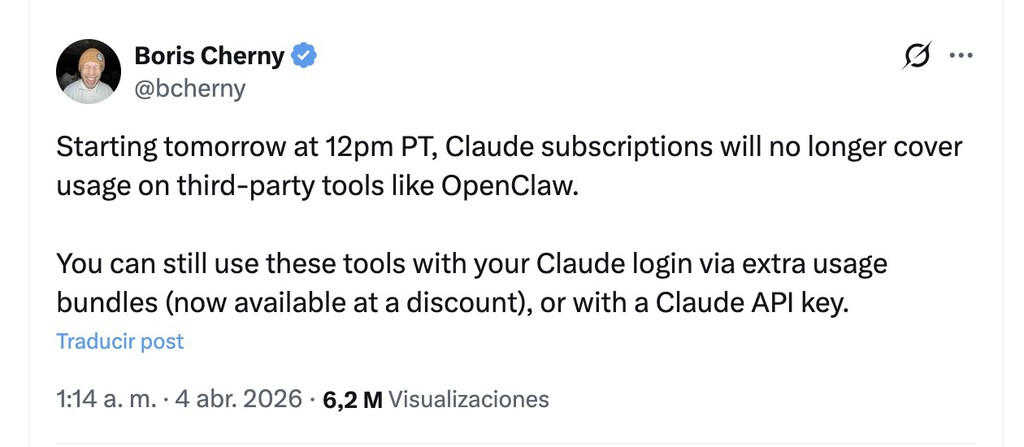
Users of the agent have criticized the move. Even if reasonable on some level, they argue it's a disturbing tactic given how and when it arrived. The timing—right after OpenClaw gained traction—feels deliberate to many.
Why Anthropic Blocked OpenClaw: The Token Drain
Anthropic's rationale is straightforward: OpenClaw and other AI agents consume too many tokens. The Claude Pro and Max plans are designed for use in Claude Code for programming, not for powering autonomous agents that can run continuously and perform complex tasks.
In essence, Anthropic is saying that if you want to use Claude with OpenClaw, you need to pay through the API. The company doesn't prohibit using its models with OpenClaw, but it makes clear that such use requires the API, not a subscription plan.
The Analogy: A Monthly Transport Pass vs. Unlimited Rides
Think of it like buying a $20 monthly transit pass for unlimited metro rides. It works perfectly for commuting to work or university. But if you start using it to run a delivery business, the transit authority will notice and shut it down. That's essentially what Anthropic is doing: enforcing the intended use of its subscription plans.
The Walled Garden Strategy: Lessons from Nintendo
This move is part of a broader walled garden strategy that Anthropic appears to be building. A walled garden is a closed ecosystem where the platform owner controls all aspects of access and usage. Nintendo famously perfected this approach with its consoles and games, ensuring that only approved software runs on its hardware and that it captures a share of every transaction.
By restricting OpenClaw's access to subscription plans, Anthropic is tightening control over how its models are used. It wants users to interact with Claude through its own interfaces or via the API, where it can monitor and monetize usage more effectively. This mirrors Nintendo's approach of locking down its platform to maximize revenue and maintain quality control.
Why This Matters for the AI Agent Ecosystem
The decision has significant implications for the growing ecosystem of AI agents. OpenClaw is just one example of a third-party agent that leverages powerful language models. If other model providers follow Anthropic's lead, agent developers could face higher costs and stricter terms.
For users, it means the era of cheap, unlimited access to top-tier models through subscription plans may be ending. Those who relied on Claude Pro or Max to power OpenClaw will now need to budget for API usage, which can be significantly more expensive for heavy use.
Key Takeaways
- Anthropic blocked Claude Pro/Max accounts from being used with OpenClaw, forcing users to the API.
- The company argues that AI agents like OpenClaw consume too many tokens for subscription plans.
- Critics see the move as part of a walled garden strategy similar to Nintendo's closed ecosystem.
- Users must now pay API rates to use Claude with OpenClaw, which could increase costs.
- The decision may set a precedent for how other AI model providers treat third-party agents.
Comparison: Claude Pro/Max vs. API for OpenClaw
| Feature | Claude Pro/Max | API |
|---|---|---|
| Intended use | Claude Code for programming | Flexible, including agents |
| Cost model | Monthly subscription | Pay-per-token |
| OpenClaw compatibility | Blocked | Allowed |
| Token limits | Designed for individual use | Scalable with usage |
| Control | Restricted to Anthropic's interfaces | Full access via API |
The table highlights the trade-offs. While the API offers flexibility, it comes at a higher cost for heavy users. Subscription plans were a bargain for power users, but Anthropic is now enforcing boundaries. The background to this story is set out in Kimi Code: China's AI Strategy Nearly Matches Claude at a Fraction. A related thread runs through Gemini Spark vs OpenClaw: Google's AI Agent Adds a Toll. Earlier coverage in Claude Code: AI Programming Tool for Your Terminal Explained shows how the argument developed.
What to Watch Next
How OpenClaw and its community respond will be crucial. Steinberger may seek alternative models or negotiate with Anthropic. Other AI agent developers are likely watching closely, as this could signal a shift in how model providers treat third-party integrations. A closer look at the same subject appears in AI Coding Race: Cursor's Composer 2.5 Takes On GPT-5.5 and Claude Opus 4.7. Anyone following the wider picture can start with Claude Down: Anthropic Investigating Major Global Outage. The same theme surfaces in Anthropic Raises Claude Limits with SpaceXAI and Colossus, which takes a different angle.
For now, users who want to continue using Claude with OpenClaw must migrate to the API. That means adjusting budgets and usage patterns. The walled garden is growing, and the gates are getting tighter. Context on how this played out before sits in Claude Code Leaked Your Email to Websites: What You Need to Know. A companion piece, AI Coding Tools Like Claude Code Turn Developers Into Enter-Key Pushers, approaches the same subject from another angle.
FAQ
What exactly did Anthropic block?
Anthropic blocked Claude Pro and Max subscription accounts from being used with OpenClaw. Users can no longer access Claude models through those plans when using the OpenClaw agent.
Why did Anthropic make this decision?
Anthropic says that AI agents like OpenClaw consume too many tokens, and subscription plans are intended for use with Claude Code for programming, not for powering autonomous agents.
Can I still use Claude with OpenClaw?
Yes, but you must use the API instead of a subscription plan. This means paying per token, which can be more expensive for heavy usage.
What is a walled garden strategy?
A walled garden is a closed ecosystem where the platform owner controls access and usage. Nintendo is a classic example, and Anthropic appears to be adopting a similar approach to control how its models are used.
Browse the Shop
 Acacia frida deluxe solid wood bed frame |
Bedroom bench |
Bed chest drawers |
Lingerie dresser |
Frame base |
Mirror with jewelry storage |
30 Bathroom Vanity |
Memory foam queen mattress |
Mattresses for back pain |
Nightstand set of 2 |
Grand Goldman Shop |
Civil Lawyer
Deutschland Trikot WM 2026







