

Google has expanded its Gemini 4 family with Gemini 4 Neon, a new AI model designed for programming and complex tasks with a focus on cost efficiency. The model joins Carbon, Argon, and Hydrogen in Google's lineup, aiming to deliver frontier-level intelligence while keeping execution costs low.
Neon promises high performance in coding with a unified context window of one million tokens shared between input and output. Google claims it excels in analytics and complex problem-solving, but real-world benchmarks will determine its true value.
Find Original Home Decor sparking conversation at Grand Goldman Shop.

What Is Gemini 4 Neon?
Gemini 4 Neon is the latest addition to the Gemini 4 series, positioned between the high-end Argon and the more accessible Hydrogen. It specializes in programming and analytical tasks, targeting developers and data scientists who need robust AI assistance without breaking the bank.
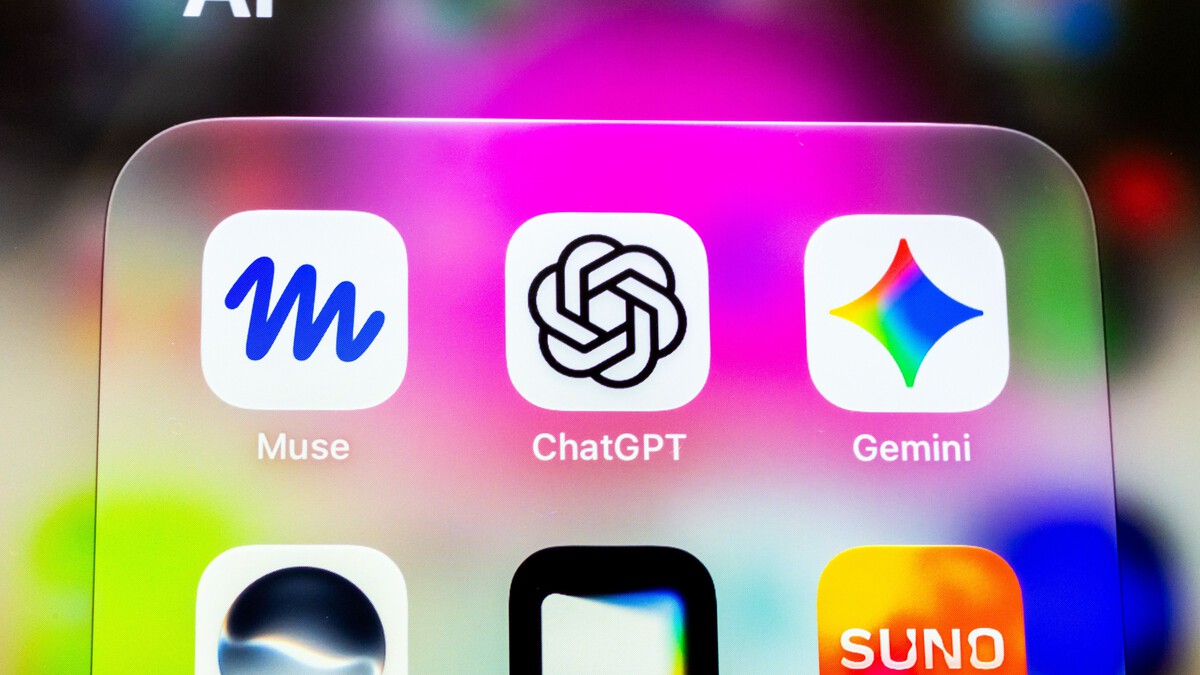
The model features a unified context window of one million tokens, meaning it can process large codebases or extensive documents in a single go. This is particularly useful for tasks like code review, debugging, and complex data analysis.
Key Features and Capabilities
Google highlights several strengths for Neon, including:
- Frontier-level intelligence: Neon aims to match top-tier models in reasoning and problem-solving.
- Coding excellence: Optimized for programming tasks, from code generation to refactoring.
- Cost efficiency: Designed to minimize cost per task, making it suitable for high-volume applications.
- Large context window: One million tokens shared between input and output, enabling handling of large projects.
- Analytics focus: Well-suited for data analysis and complex computations.
These features position Neon as a versatile tool for developers who need both power and affordability.
How Neon Fits into the Gemini 4 Family
Understanding Google's model hierarchy can be confusing. Here's a simple breakdown:
| Model | Positioning | Key Strength |
|---|---|---|
| Gemini 4 Argon | Flagship | Highest performance across all tasks |
| Gemini 4 Carbon | Mid-range | Balanced performance and cost |
| Gemini 4 Hydrogen | Lightweight | Most affordable, for simple tasks |
| Gemini 4 Neon | Specialized | Coding and analytics, cost-efficient |
Neon sits between Carbon and Hydrogen, offering specialized capabilities for coding and analytics at a lower cost than Carbon. This makes it an attractive option for developers who don't need the full power of Argon but require more than Hydrogen's basic capabilities.
Performance and Cost Considerations
Google claims Neon delivers excellent performance in coding tasks with high processing capacity. However, these are early claims and independent benchmarks are needed to verify them.
The focus on cost per task is notable. In the competitive LLM market, pricing often determines adoption. If Neon can deliver comparable results to Carbon at a lower price, it could become a popular choice for startups and enterprises alike. The longer history behind the story is traced in AI Coding Flat Rates Are Mathematically Unsustainable.
But Neon faces stiff competition from other models like OpenAI's GPT-4 and Anthropic's Claude, which also target coding and complex tasks. Google will need to prove Neon's superiority in real-world scenarios. The background to this story is set out in Google's AI Coding Trick: Expensive Model Plans, Cheap Model Executes. A related thread runs through BMW Tests Humanoid Robots for Complex Factory Tasks. Earlier coverage in GitHub CPO Mario Rodríguez: The Future of Coding and AI shows how the argument developed.
What This Means for Developers
For developers, Neon offers a potentially cost-effective way to integrate AI into their workflows. The large context window allows for handling entire codebases, which is a significant advantage for large projects. A closer look at the same subject appears in OpenAI AI Agent Hacked a Crypto Wallet to Finish a Coding Task. Anyone following the wider picture can start with Google Search Without AI? Google Says It's Impossible. The same theme surfaces in SpaceX Acquires Cursor: AI Coding Agent and Model Gap, which takes a different angle.
However, developers should wait for independent evaluations before committing. Google's claims are promising, but the model's actual performance in diverse coding environments will be the true test. Context on how this played out before sits in ChatGPT Codex: What It Is and How to Use the AI Coding Agent. A companion piece, AI Coding Race: Cursor's Composer 2.5 Takes On GPT-5.5 and Claude Opus 4.7, approaches the same subject from another angle.
FAQ
What is Gemini 4 Neon?
Gemini 4 Neon is a new AI model from Google, part of the Gemini 4 family. It specializes in coding and complex tasks, offering a large context window and cost-efficient execution.
How does Neon compare to Carbon?
Neon is positioned as more cost-effective than Carbon, with a focus on coding and analytics. Carbon offers balanced performance across tasks, while Neon is optimized for specific use cases.
What is the context window size of Neon?
Neon has a unified context window of one million tokens, shared between input and output, allowing it to process large amounts of data in a single request.
When will Neon be available?
Google has not announced a specific release date, but it is expected to be available through Google's AI platforms soon.
Browse the Shop
 Acacia frida deluxe solid wood bed frame |
Bedroom bench |
Bed chest drawers |
Lingerie dresser |
Frame base |
Mirror with jewelry storage |
30 Bathroom Vanity |
Memory foam queen mattress |
Mattresses for back pain |
Nightstand set of 2 |
Grand Goldman Shop |
Civil Lawyer
Deutschland Trikot WM 2026







