

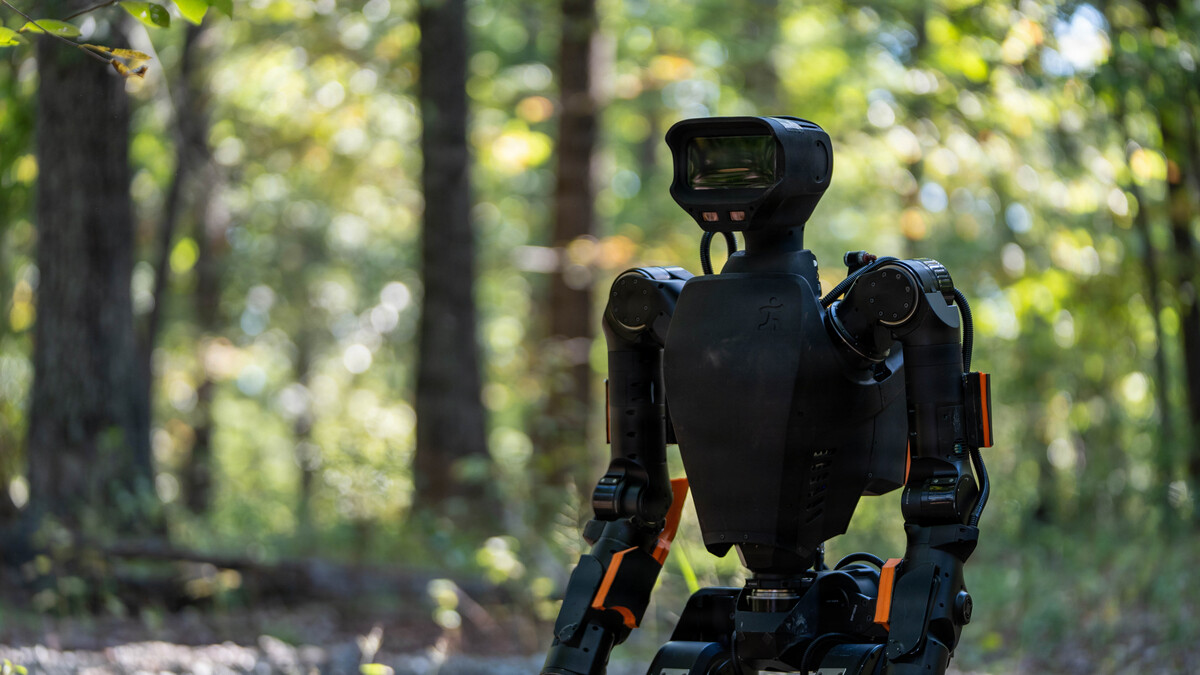
The US military has taken a significant step toward integrating humanoid robots into future operations. The Army recently concluded xTechHumanoid, a competition designed to evaluate how industry-developed humanoid technologies could fit into military scenarios. Among the five winners is Alex, a humanoid built by the Florida Institute for Human and Machine Cognition (IHMC).
The competition attracted 103 proposals, with ten companies reaching the final stage. Nine demonstrated their technologies before military officials, technical experts, and evaluators at Quantico. The Army ultimately selected five winners, signaling a growing interest in legged robots that can navigate environments designed for humans.
Find Original, High-end Home Decor that spark conversation at Grand Goldman Shop.
Why the US Army Is Looking at Humanoid Robots
For decades, humanoid robots have been confined to laboratories and showcases. Honda's ASIMO famously demonstrated walking, running, and climbing stairs, but these capabilities were mostly spectacle. Today, advances in mobility, balance, and payload capacity have made humanoids far more capable in uncontrolled environments.
As these machines become more robust, militaries are asking how they could be used in operations. The Army's xTechHumanoid competition is part of that exploration. It aims to identify technologies that could assist soldiers in tasks ranging from logistics to reconnaissance, potentially reducing risk to human personnel.
What Is xTechHumanoid?
xTechHumanoid is a competition run by the US Army to assess industry-developed humanoid robots. It is not a procurement program; rather, it is an evaluation and experimentation phase. The goal is to understand what humanoids can do and how they might be integrated into future military operations.
The competition received 103 proposals, highlighting strong industry interest. Ten companies were selected as finalists, and nine demonstrated their technologies at Quantico. The Army then chose five winners, each representing a different approach to humanoid robotics.
The Winners and What They Represent
While the full list of winners has not been detailed, Alex from IHMC is one of them. Alex is a humanoid robot designed for research and development, with a focus on dynamic locomotion and manipulation. Its selection indicates the Army's interest in robots that can move like humans and operate in human-centric spaces.
Other winners likely include companies with expertise in legged locomotion, artificial intelligence, and ruggedized hardware. The diversity of winners suggests the Army is casting a wide net, exploring multiple technological pathways.
Alex: A Closer Look at the IHMC Humanoid
Alex is developed by the Florida Institute for Human and Machine Cognition (IHMC), a research institute known for its work in robotics and human-machine interaction. IHMC has a history of building and programming humanoid robots for DARPA challenges and other research initiatives.
Alex is designed to be a research platform, but its capabilities align with military interests. It can walk, balance, and manipulate objects, and it is built to operate in environments that are not specifically tailored for robots. This makes it a candidate for further evaluation.
However, selection as a winner does not mean Alex will enter service. The Army is clear that this is an evaluation phase, and any deployment would require further testing, development, and procurement processes. The longer history behind the story is traced in China's Military Humanoid Robots: From Showcase to Battlefield.
Key Takeaways from the Competition
- The US Army's xTechHumanoid competition received 103 proposals, with five winners selected.
- Alex, developed by IHMC, is one of the winning humanoid robots.
- The competition is an evaluation and experimentation phase, not a procurement program.
- Humanoid robots are being assessed for roles in logistics, reconnaissance, and other military tasks.
- Industry interest is high, with ten finalists demonstrating their technologies at Quantico.
Comparison of Humanoid Robot Capabilities
| Feature | Alex (IHMC) | Typical Humanoid Robots |
|---|---|---|
| Locomotion | Dynamic walking, balancing | Walking, some running |
| Manipulation | Yes, research-focused | Varies, often limited |
| Environment | Unstructured, human-centric | Often controlled |
| Purpose | Research platform | Research, entertainment, education |
| Military Evaluation | Selected for xTechHumanoid | Not typically evaluated |
What This Means for the Future of Military Robotics
The Army's interest in humanoid robots reflects a broader trend: as robots become more capable, militaries are exploring how they can be used to augment human forces. Humanoids offer the advantage of operating in environments built for humans, such as buildings, vehicles, and staircases. The background to this story is set out in China AI and Humanoid Robots: Beijing Warns Against Blind Investment. A related thread runs through FCC Bans Chinese Humanoid Robots Over National Security Risks. Earlier coverage in China's Humanoid Robot Race: Progress, Pitfalls, and Promise shows how the argument developed.
However, challenges remain. Power supply, durability, autonomy, and cost are all significant hurdles. The xTechHumanoid competition is a way to identify promising technologies and potentially shape future requirements. A closer look at the same subject appears in US Bans Humanoid Robots from China: National Security Risks. Anyone following the wider picture can start with FCC Bans Humanoid Robots from China Over National Security Risks. The same theme surfaces in China's Humanoid Robot Market Dominance: 97% of Global Shipments, which takes a different angle.
For now, the focus is on learning. The Army will continue to evaluate the winners and may conduct further experiments. The results could influence future development and acquisition decisions. Context on how this played out before sits in US Bans Chinese Humanoid Robots Citing National Security Risks. A companion piece, Humanoid Robots Compete in Chinese Sports, approaches the same subject from another angle.
FAQ
What is xTechHumanoid?
xTechHumanoid is a competition run by the US Army to evaluate industry-developed humanoid robots for potential military use. It is an experimentation phase, not a procurement program.
Who is Alex the humanoid robot?
Alex is a humanoid robot developed by the Florida Institute for Human and Machine Cognition (IHMC). It is designed for research and can walk, balance, and manipulate objects in unstructured environments.
Will Alex be deployed by the US military?
Not necessarily. Selection as a winner in xTechHumanoid means Alex will be part of an evaluation phase. Any deployment would require further testing and procurement processes.
How many companies participated in xTechHumanoid?
The competition received 103 proposals, with ten finalists and nine demonstrations at Quantico. Five winners were ultimately selected.
Browse the Shop
 Acacia frida deluxe solid wood bed frame |
Bedroom bench |
Bed chest drawers |
Lingerie dresser |
Frame base |
Mirror with jewelry storage |
30 Bathroom Vanity |
Memory foam queen mattress |
Mattresses for back pain |
Nightstand set of 2 |
Grand Goldman Shop |
Civil Lawyer
Deutschland Trikot WM 2026







