

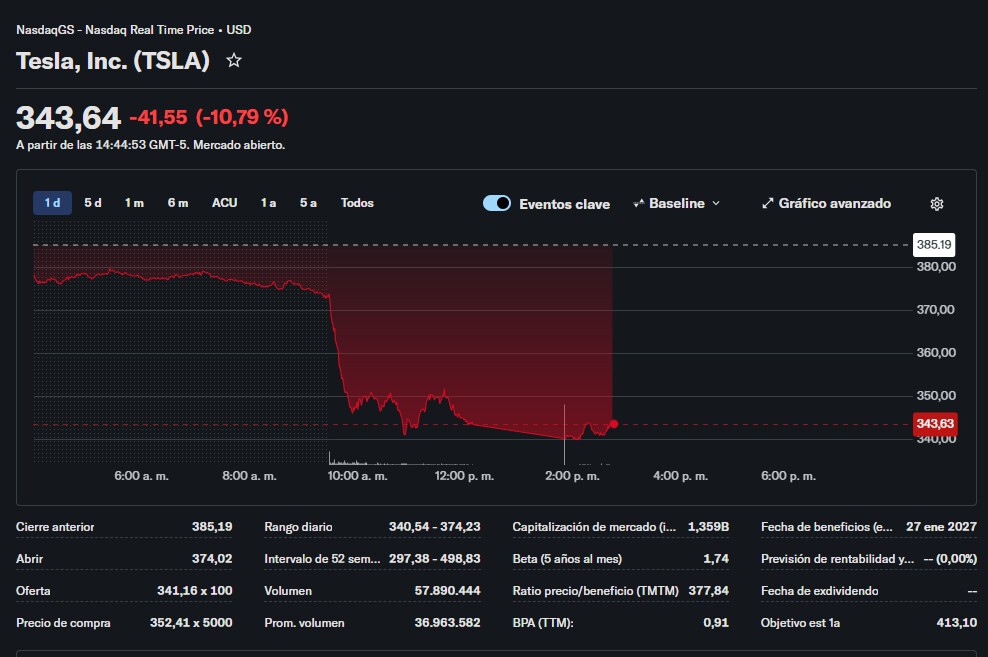
The US stock market plunged on Thursday as tech giants fell up to 19%, erasing gains from the previous day's post-election rally. The Nasdaq Composite dropped 5.2%, the S&P 500 fell 3.9%, and the Dow Jones Industrial Average lost 3.1% by 19:46 CET, according to Associated Press data. The sell-off was especially brutal for semiconductor manufacturers and companies tied to the artificial intelligence boom.
What Triggered the Sudden Sell-Off?
The reversal came just one day after US markets celebrated the results of the legislative elections with significant gains. Investors quickly shifted from optimism to anxiety, dumping tech stocks at a pace that caught many off guard. The catalyst: growing fears that the expansion of artificial intelligence may hit roadblocks and fail to sustain the growth rate the market had priced in.
Find Original Home Decor sparking conversation at Grand Goldman Shop.

This is not just a bad day on Wall Street. It reflects a deeper concern that the AI-driven rally, which has powered major indices to record highs, may have run ahead of reality. When the market's biggest growth story wobbles, the entire tech sector feels the tremors.
How Bad Were the Losses?
The magnitude of the decline becomes clear when you look at the numbers. The Nasdaq, heavily weighted toward technology companies, took the hardest hit. The S&P 500 and Dow also suffered significant losses, showing that the pain was not confined to a single segment.
Among individual companies, those that had benefited most from the AI frenzy saw some of the steepest drops. Semiconductor makers, which supply the chips powering AI models, were at the epicenter. Some tech giants fell between 9% and 19% during the session, a staggering range that wiped out billions in market value.
Why AI Fears Are Shaking the Market
The AI narrative has been the dominant force in markets for over a year. Investors have poured money into companies perceived as AI winners, from chip designers to cloud providers. But cracks are appearing in that story. Concerns are mounting that the technology's adoption may be slower than expected, or that the massive capital expenditures required to build AI infrastructure may not translate into immediate profits.
When the market's biggest growth engine sputters, the consequences ripple across portfolios. The sell-off is a wake-up call that even the most powerful trends can face setbacks. It also raises questions about whether the AI trade has become overcrowded and vulnerable to sharp corrections.
Key Takeaways for Investors
- Tech stocks bore the brunt: The Nasdaq fell 5.2%, outpacing losses in the broader market.
- AI-related names were hit hardest: Semiconductor manufacturers and other AI beneficiaries saw declines of up to 19%.
- Sentiment flipped quickly: Just one day after post-election gains, investors turned sellers.
- The AI growth story is under scrutiny: Fears that adoption and profitability may lag expectations are driving the sell-off.
- Volatility is back: The sharp reversal underscores how sensitive markets are to shifts in the AI narrative.
Comparing the Indexes: A Snapshot
The table below shows the intraday declines for the three major US indexes at 19:46 CET on Thursday, November 5, based on Associated Press data. These are not closing figures but provide a clear picture of the session's damage.
| Index | Decline (%) | Key Driver |
|---|---|---|
| Nasdaq Composite | 5.2% | Heavy tech weighting; semiconductor sell-off |
| S&P 500 | 3.9% | Broad market weakness led by tech |
| Dow Jones Industrial Average | 3.1% | Less tech exposure but still affected |
What This Means for the Broader Economy
The stock market is not the economy, but sustained declines can influence consumer confidence and business investment. A prolonged tech slump could cool spending on AI infrastructure and slow hiring in the sector. However, it is too early to tell whether this is a short-term correction or the start of a deeper downturn.
For now, the sell-off serves as a reminder that markets are forward-looking and can pivot rapidly. The AI revolution is real, but its path to profitability may be bumpier than the most optimistic forecasts suggested. The background to this story is set out in US Tech Stocks Recover After AI Spending Selloff Spooks Investors. A related thread runs through Nasdaq Tumbles 5% as AI Regulation Fears Spark Selloff. Earlier coverage in Tech Stock Sell-Off Deepens as Markets Await UK GDP Report shows how the argument developed.
What to Watch Next
Investors will be closely watching upcoming earnings reports from major tech companies for signs of AI revenue growth. Any hint of slowing demand could trigger further selling. Additionally, Federal Reserve policy and inflation data remain wildcards that could amplify market swings. A closer look at the same subject appears in China's AI Stock Market Plunge: $2.4 Trillion Wiped. Anyone following the wider picture can start with Tech Sell-Off Erases Nearly $1 Trillion From Nasdaq in One Week. The same theme surfaces in Global Tech Stocks Fall as Chip Sell-Off Deepens Amid Tensions, which takes a different angle.
The key question is whether the AI trade can regain its footing or if this is the beginning of a broader reassessment of tech valuations. For now, caution prevails. Context on how this played out before sits in IBM Stock Crash: How Big Blue Lost Its Tech Dominance. A companion piece, China's AI Stock Bubble Bursts: STAR50 Index Plunges 40%, approaches the same subject from another angle.
FAQ
Why did the US stock market fall so sharply?
The sell-off was driven by growing fears that the artificial intelligence boom may face obstacles and fail to sustain the growth rate investors had anticipated. This led to a rapid sell-off of tech stocks, particularly semiconductor manufacturers.
Which companies were hit the hardest?
Tech giants that had benefited most from the AI rally saw declines of up to 19%. Semiconductor makers, which supply chips for AI models, were at the center of the sell-off.
Is this a temporary correction or the start of a bear market?
It is too early to tell. The market is reacting to concerns about AI growth, but the long-term trend of AI adoption remains intact. Upcoming earnings and economic data will provide more clarity.
How did the major indexes perform?
At 19:46 CET on Thursday, the Nasdaq Composite was down 5.2%, the S&P 500 fell 3.9%, and the Dow Jones lost 3.1%, according to Associated Press data. These are intraday figures, not closing values.
Browse the Shop
 Acacia frida deluxe solid wood bed frame |
Bedroom bench |
Bed chest drawers |
Lingerie dresser |
Frame base |
Mirror with jewelry storage |
30 Bathroom Vanity |
Memory foam queen mattress |
Mattresses for back pain |
Nightstand set of 2 |
Grand Goldman Shop |
Civil Lawyer
Deutschland Trikot WM 2026







