

The James Webb Space Telescope has detected a mysterious signal in the constellation Fornax, leaving astronomers puzzled and eager to uncover its origin. This unexpected finding comes from one of the most studied regions of the sky, raising new questions about what lies beyond our current understanding.
When we look up at the night sky, we see only a fraction of what exists. Space telescopes like Webb reveal objects invisible to the human eye, and sometimes they stumble upon surprises that challenge our assumptions.
Find Original Home Decor sparking conversation at Grand Goldman Shop.

Why Fornax? The Most Observed Patch of Sky
The constellation Fornax, in the southern sky, hosts a tiny patch that has become a favorite target for space telescopes. The Hubble Space Telescope spent 270 hours observing this area to capture its famous Ultra Deep Field image, revealing 10,000 galaxies and billions of years of cosmic history.
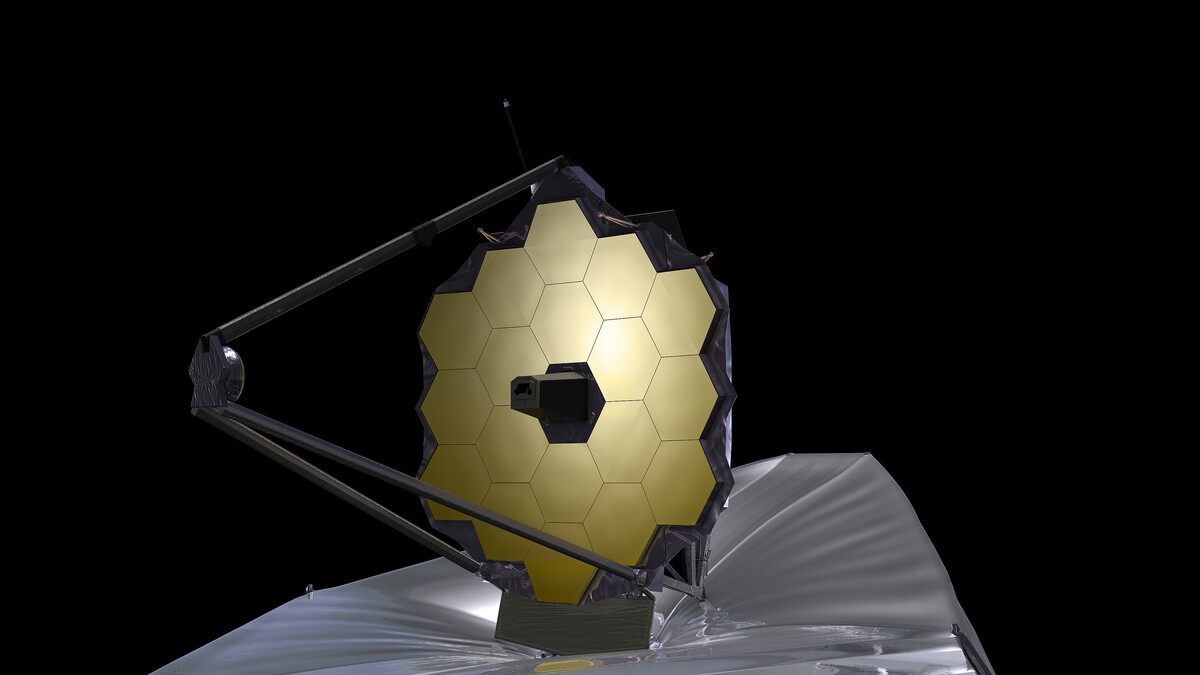
It was only logical for the James Webb Space Telescope to turn its infrared eyes to the same spot. With its ability to measure in near- and mid-infrared, Webb could detect what Hubble could not. However, scientists were not prepared for what they found: a signal so mysterious that they have yet to identify it.
What Makes This Signal So Mysterious?
The signal detected by Webb does not match any known astronomical phenomenon. It is not clearly associated with any visible object in the Ultra Deep Field, and its properties are unlike typical emissions from galaxies or stars.
Astronomers are now analyzing the data to determine whether it could be a new type of celestial object, an unexpected physical process, or perhaps even a technical anomaly. The fact that it appears in such a well-studied region adds to the intrigue.
Potential Explanations Under Investigation
Researchers are considering several possibilities. The signal could originate from a distant galaxy with unusual characteristics, or it might be the result of gravitational lensing amplifying a faint background source. Alternatively, it could be a previously unknown type of transient event.
Another possibility is that the signal is an artifact of the telescope's instruments, but early analyses suggest it is real. Further observations are planned to confirm and characterize the signal.
The Importance of This Discovery
This finding highlights the power of the James Webb Space Telescope to uncover the unexpected. Even in a region observed for hundreds of hours by Hubble, Webb's superior sensitivity and infrared capabilities reveal new mysteries. Context on how this played out before sits in James Webb Telescope Detects Mysterious Signal in Fornax. A companion piece, James Webb Detects Variable Water Clouds Beyond Solar System, approaches the same subject from another angle.
Understanding this signal could lead to breakthroughs in our knowledge of the early universe, dark matter, or exotic physics. It also demonstrates that our understanding of the cosmos is far from complete. The background to this story is set out in Astronomers Detect Most Distant Fast Radio Burst From Far Galaxy. A related thread runs through James Webb Solves Mystery of Extreme Debris Disks.
- Webb's infrared vision penetrates dust and gas to reveal hidden objects.
- The Fornax Ultra Deep Field is one of the most observed regions, yet still holds secrets.
- The mysterious signal does not match any known astronomical source.
- Follow-up observations are crucial to determine its nature.
- This discovery underscores the need for continued exploration.
What Happens Next?
Astronomers will conduct additional observations with Webb and other telescopes to pinpoint the signal's source and characteristics. They will also analyze archival data from Hubble and other instruments to see if any counterpart exists. Earlier coverage in Science: latest articles shows how the argument developed. A closer look at the same subject appears in Hydrogen Fuel Cell Powers NASA Lunar Missions Through Two-Week Nights.
If the signal is confirmed as a new phenomenon, it could open up entirely new avenues of research. If it turns out to be an anomaly, it will still provide valuable lessons about instrument calibration and data analysis. Anyone following the wider picture can start with NBA 2026-27 Season Predictions: Knicks Repeat and LeBron's Villain Arc. The same theme surfaces in Olympic Rowing 2032 on Crocodile-Infested Fitzroy River Explained, which takes a different angle.
| Aspect | Details |
|---|---|
| Location | Fornax constellation, southern sky |
| Observatory | James Webb Space Telescope |
| Wavelength | Near- and mid-infrared |
| Previous observations | Hubble Ultra Deep Field (270 hours) |
| Status | Unidentified, under investigation |
FAQ
What is the mysterious signal detected by the James Webb Telescope?
The signal is an unidentified emission found in the Fornax constellation, in a region known as the Ultra Deep Field. It does not match any known astronomical object or process, and astronomers are still analyzing its properties.
Why is the Fornax constellation so important for astronomy?
Fornax contains a small patch of sky that has been observed extensively, most notably by the Hubble Space Telescope for its Ultra Deep Field image. This region reveals thousands of galaxies and provides a deep look into the universe's history.
Could the signal be a sign of new physics?
It is too early to tell. While the signal is unexplained, scientists are considering conventional explanations such as unusual galaxies or gravitational lensing before resorting to new physics. Further observations will help clarify.
What will astronomers do next to solve the mystery?
They will conduct follow-up observations with Webb and other telescopes to confirm the signal and study its properties. They will also compare with archival data to search for any counterpart at other wavelengths.
Browse the Shop
 Acacia frida deluxe solid wood bed frame |
Bedroom bench |
Bed chest drawers |
Lingerie dresser |
Frame base |
Mirror with jewelry storage |
30 Bathroom Vanity |
Memory foam queen mattress |
Mattresses for back pain |
Nightstand set of 2 |
Grand Goldman Shop |
Civil Lawyer
Deutschland Trikot WM 2026







