

A Madrid wildfire has forced the evacuation of a NASA Deep Space Network facility in Robledo de Chavela, placing a critical piece of global space communications infrastructure in jeopardy. The fire, advancing through southwestern Madrid, prompted urgent efforts to protect the complex, which is used to maintain contact with missions at vast distances from Earth.
The warning came from Francisco Martín, the Spanish government's delegate in Madrid, who stated that the installation "se encuentra en una situación crítica" and that emergency crews were doing "lo imposible para protegerla." The fire was also passing through its "momento álgid," with the head of the blaze beyond extinguishing capacity, according to the Community of Madrid.
Find Original Home Decor sparking conversation at Grand Goldman Shop.

What Happened at the NASA Facility?
The approximately 90 workers at the complex have been evacuated, and no personnel remain inside the perimeter. As a result, it is not yet possible to confirm whether flames have penetrated the installations or caused damage. Goldman Media contacted the Jet Propulsion Laboratory (JPL) and the Ministry of the Interior. After coordinating with the agency's headquarters, a NASA spokesperson confirmed that "el incendio ha atravesado el MDSCC" (the fire has crossed the Madrid Deep Space Communications Complex).
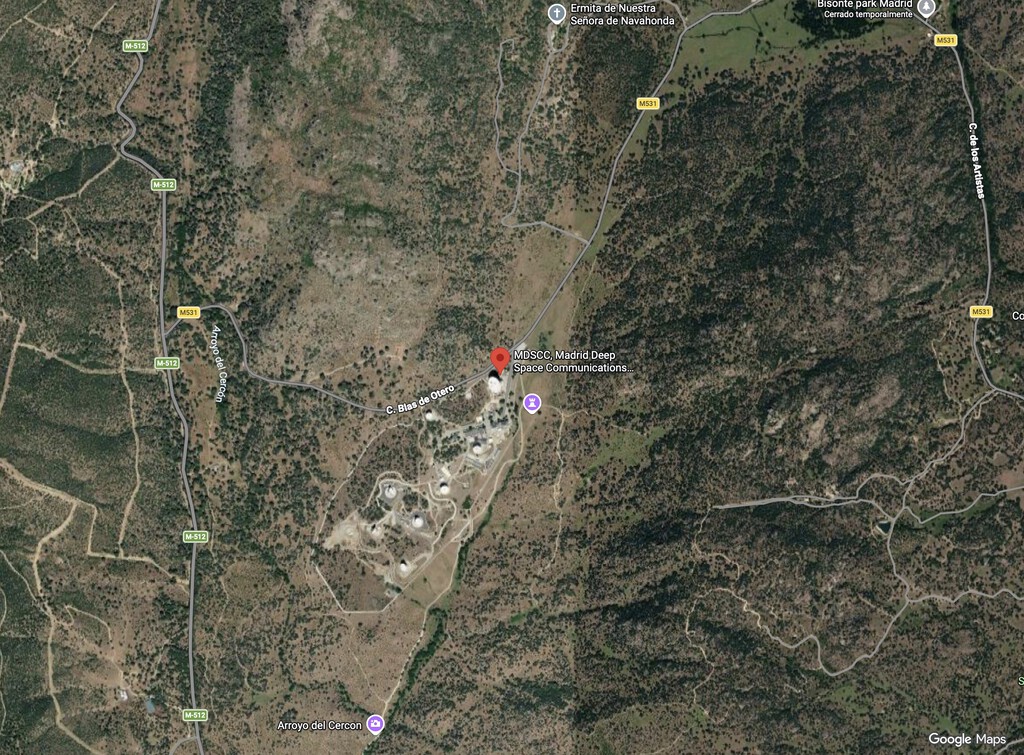
Potential damage will be assessed once the situation allows safe access. The complex is part of NASA's Deep Space Network, a worldwide system of antennas that communicates with spacecraft. Its location in Robledo de Chavela is one of three primary sites, alongside Goldstone in California and Canberra in Australia.
Why the Deep Space Network Matters
The Deep Space Network is indispensable for tracking, commanding, and receiving data from missions across the solar system and beyond. Without it, spacecraft would be unable to send scientific data or receive instructions from Earth. The Madrid complex, known as MDSCC, hosts several large antennas, including the 70-meter DSS-63 and the 34-meter beam waveguide antennas.
These facilities support missions such as Voyager, Mars rovers, and the James Webb Space Telescope, among many others. The network's global distribution allows continuous communication as Earth rotates. The loss or damage of one site could disrupt coverage, although the network has redundancy built in.
Key Functions of the Robledo de Chavela Complex
- Provides deep space tracking and communication services for NASA and partner missions.
- Hosts large-aperture antennas capable of receiving faint signals from distant spacecraft.
- Operates as part of a three-site global network for continuous coverage.
- Supports scientific data downlink and spacecraft command uplink.
- Collaborates with international space agencies and research institutions.
Immediate Response and Evacuation
Emergency services focused on protecting the installation as the fire advanced. The evacuation of 90 workers was carried out to ensure safety. The fire's intensity, described as beyond extinguishing capacity at its head, underscores the severity of the threat. Crews worked under challenging conditions to defend the site.
The confirmation that the fire has crossed the complex suggests some level of impact, but the extent remains unknown. NASA and Spanish authorities are coordinating to evaluate the situation once it is safe to do so.
Potential Impact on Space Operations
If the Madrid complex is damaged, the Deep Space Network could face reduced capacity. Missions relying on that site might experience communication delays or require reallocation to other stations. However, the network's design includes overlapping coverage, which can mitigate some disruptions. The longer history behind the story is traced in New Horizons Wakes Up 9.5 Billion Kilometers from Earth.
The MDSCC is a key asset for European space activities as well, often supporting ESA missions. Any downtime could affect scientific return and operational schedules. The full assessment will depend on the condition of antennas and supporting infrastructure. The background to this story is set out in Aragon Wildfire Threatens San Juan de la Peña Monastery. A related thread runs through Reno Wildfire Forces Mass Evacuations as Flames Threaten City. Earlier coverage in France Evacuates Cap Ferret as Spain Wildfires Merge Near Madrid shows how the argument developed.
| Deep Space Network Site | Location | Primary Antennas | Coverage Region |
|---|---|---|---|
| Goldstone | California, USA | 70m, 34m | Western hemisphere |
| Madrid (MDSCC) | Robledo de Chavela, Spain | 70m, 34m | Europe/Africa |
| Canberra | Australia | 70m, 34m | Eastern hemisphere |
What to Watch Next
Authorities will continue battling the wildfire, and NASA will assess the facility once access is safe. Updates on the condition of the antennas and any operational changes will be closely watched by the space community. The incident highlights the vulnerability of critical infrastructure to natural disasters. A closer look at the same subject appears in Madrid's Largest Wildfire Burned 28,000 Hectares but Left Seven Bison Alive. Anyone following the wider picture can start with George Clooney Evacuates French Home as Wildfire Threatens Estate. The same theme surfaces in Wildfires Near Madrid: Homeowners Return to Devastation and, which takes a different angle.
As climate change increases the frequency of extreme wildfires, even space communications hubs are not immune. The resilience of the Deep Space Network will be tested in the coming days. Context on how this played out before sits in Take advantage of all the space in your corners by placing some beautiful shelves!. A companion piece, Wildfires Near Madrid: Residents Return to Devastated Homes, approaches the same subject from another angle.
FAQ
What is the NASA facility in Robledo de Chavela?
It is the Madrid Deep Space Communications Complex (MDSCC), part of NASA's Deep Space Network. It provides communication with distant spacecraft using large antennas.
Has the wildfire damaged the NASA complex?
NASA confirmed that the fire has crossed the complex, but damage assessment is pending. No personnel remain inside, and the extent of damage is not yet known.
How will this affect space missions?
If the facility is damaged, the Deep Space Network could face reduced capacity. Missions might experience delays or rely on other stations, but redundancy may mitigate impacts.
Why is the Deep Space Network important?
It enables communication with spacecraft across the solar system, supporting scientific discovery and mission operations. Without it, many missions would be unable to send data or receive commands.
Browse the Shop
 Acacia frida deluxe solid wood bed frame |
Bedroom bench |
Bed chest drawers |
Lingerie dresser |
Frame base |
Mirror with jewelry storage |
30 Bathroom Vanity |
Memory foam queen mattress |
Mattresses for back pain |
Nightstand set of 2 |
Grand Goldman Shop |
Civil Lawyer
Deutschland Trikot WM 2026







