

The exoplanet size gap is a curious mystery in astronomy: despite discovering over 6,000 exoplanets since 1992, scientists have found none with a radius between 1.8 and 2 times that of Earth. This 'forbidden' zone, known as the radius valley or size gap, separates super-Earths from sub-Neptunes. NASA has a plan to investigate, but funding remains elusive.
What Is the Exoplanet Size Gap?
The exoplanet size gap refers to the observed absence of planets with sizes between about 1.8 and 2 Earth radii. Planets smaller than this are called super-Earths, while those larger are sub-Neptunes. This gap was first noticed in data from the Kepler space telescope and has since been confirmed by other surveys.
Find Original Home Decor sparking conversation at Grand Goldman Shop.

Astronomers have two main hypotheses to explain the gap. One suggests that planets lose their atmospheres due to radiation from their host stars, shrinking from sub-Neptunes to super-Earths. The other proposes that planets form with different compositions, leading to two distinct populations. To test these ideas, scientists need to study young planets, which are still in the process of forming and evolving.
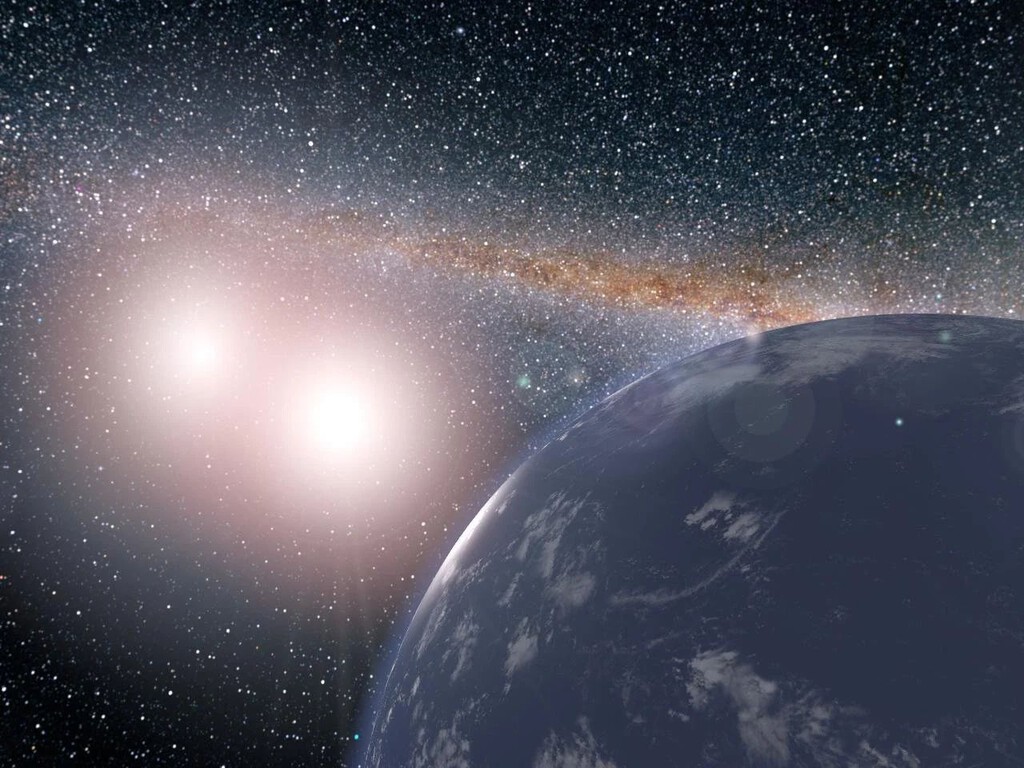
Why Young Planets Are Key
Young planets offer a window into the early stages of planetary evolution. If the gap is caused by atmospheric loss, young planets should still have their atmospheres and appear as sub-Neptunes. If the gap is primordial, young planets might already show a split in sizes. However, finding young planets is challenging: out of the 6,000 known exoplanets, only about 20 are younger than 50 million years.
That's where NASA's proposed Early eVolution Explorer (EVE) mission comes in. EVE would be a spacecraft equipped with specialized instruments to detect exoplanets around young stars. Since stars and their planets form together, targeting young stars increases the chances of finding young planets.
The EVE Mission: A Solution Without Funding
The EVE mission is designed to survey young stellar associations and clusters, looking for transiting planets. By measuring the sizes and atmospheres of these young worlds, EVE could determine which hypothesis is correct. But despite its potential, the mission has not yet secured funding from NASA.
This is not unusual in the competitive world of space science, where many worthy proposals compete for limited resources. However, the exoplanet size gap is a fundamental question about how planets form and evolve, and solving it could reshape our understanding of planetary systems, including our own.
What the Size Gap Tells Us About Planet Formation
The existence of the gap suggests that planets do not form in a continuous range of sizes. Instead, there may be a critical threshold that determines whether a planet can retain its atmosphere. This threshold likely depends on the planet's mass, its distance from the star, and the star's radiation output.
Understanding this threshold is crucial for predicting the types of planets that exist in the galaxy. It also has implications for the search for habitable worlds: super-Earths are more likely to be rocky and potentially habitable, while sub-Neptunes are likely to have thick, uninhabitable atmospheres.
Challenges and Future Prospects
Finding and characterizing young exoplanets is difficult because young stars are often active and variable, making it hard to detect the subtle signals of transiting planets. Moreover, young planets are still cooling and contracting, so their sizes may change over time. These factors complicate the interpretation of observations. The longer history behind the story is traced in Astronomer Vivien Parmentier on Mysterious Winds on Seven Exoplanets.
Despite these challenges, several ground-based surveys and space missions are contributing to the study of young exoplanets. The James Webb Space Telescope, for example, is already probing the atmospheres of some young planets. Future missions like EVE, if funded, would provide a more systematic view. The background to this story is set out in Over 6,000 Exoplanets Found, But None Like Earth: PLATO Telescope. A related thread runs through Earth-Like Exoplanet Found with Atmosphere in Habitable Zone. Earlier coverage in Earth-Like Exoplanet with Atmosphere Found 49 Light Years Away shows how the argument developed.
Why Funding Matters
In an era of tight budgets, NASA must prioritize missions with the highest scientific return. The EVE mission's focus on a fundamental question makes it compelling, but it may be years before it gets the green light. In the meantime, astronomers continue to chip away at the mystery using existing data and telescopes. A closer look at the same subject appears in Youngest Exoplanet Elias 2-24b Discovered by Chilean Scientists. Anyone following the wider picture can start with Beta Pictoris d: Faintest Exoplanet Directly Imaged from Earth. The same theme surfaces in NASA's Vulcan Exoplanet Was a Stellar Illusion, Not Spock's World, which takes a different angle.
The exoplanet size gap remains one of the most intriguing puzzles in exoplanetary science. With each new discovery, we edge closer to understanding why this gap exists and what it means for the diversity of planets in the universe. Context on how this played out before sits in Mysterious Exoplanet GJ 3090 b Orbits Backwards and Defies Explanation. A companion piece, What Is an Exoplanet? Inside the Search for Distant Worlds, approaches the same subject from another angle.
FAQ
What is the exoplanet size gap?
What is the exoplanet size gap?
The exoplanet size gap is a mysterious absence of planets with sizes between 1.8 and 2 Earth radii. This gap separates smaller super-Earths from larger sub-Neptunes and has been observed in data from multiple exoplanet surveys.
Why do astronomers want to study young exoplanets?
Why do astronomers want to study young exoplanets?
Young exoplanets are still in the process of forming and evolving, so they provide clues about how planets lose or retain their atmospheres. By studying them, astronomers can test hypotheses about the origin of the size gap.
What is the EVE mission?
What is the EVE mission?
The Early eVolution Explorer (EVE) is a proposed NASA mission designed to detect and characterize young exoplanets around nearby young stars. Its goal is to determine which hypothesis explains the exoplanet size gap.
Why hasn't the EVE mission been funded?
Why hasn't the EVE mission been funded?
The EVE mission has not yet secured funding due to intense competition for limited NASA research funds. Many worthy proposals vie for resources, and the mission must demonstrate exceptional scientific priority to be selected.
Browse the Shop
 Acacia frida deluxe solid wood bed frame |
Bedroom bench |
Bed chest drawers |
Lingerie dresser |
Frame base |
Mirror with jewelry storage |
30 Bathroom Vanity |
Memory foam queen mattress |
Mattresses for back pain |
Nightstand set of 2 |
Grand Goldman Shop |
Civil Lawyer
Deutschland Trikot WM 2026







