

NASA's LINK spacecraft, designed to rescue the Neil Gehrels Swift Observatory, is now spinning out of control in orbit after suffering critical failures. The mission, a joint effort between NASA and Katalyst Space Technologies, was launched on July 3 to save the telescope from an almost certain demise. But now, the rescuer itself needs rescuing.
The LINK spacecraft was built in record time thanks to a significant investment, after it became clear that Swift's chances of surviving beyond 2026 were very low. Everything seemed to be going smoothly until two of the reaction wheels that control the vehicle's orientation in space malfunctioned, causing it to spin uncontrollably for several days.
Find Original Home Decor sparking conversation at Grand Goldman Shop.

What Went Wrong with the LINK Spacecraft?
The problems began last weekend when two of LINK's reaction wheels stopped working. These wheels are essential for controlling the spacecraft's orientation, and their failure left LINK unable to maintain a stable attitude.
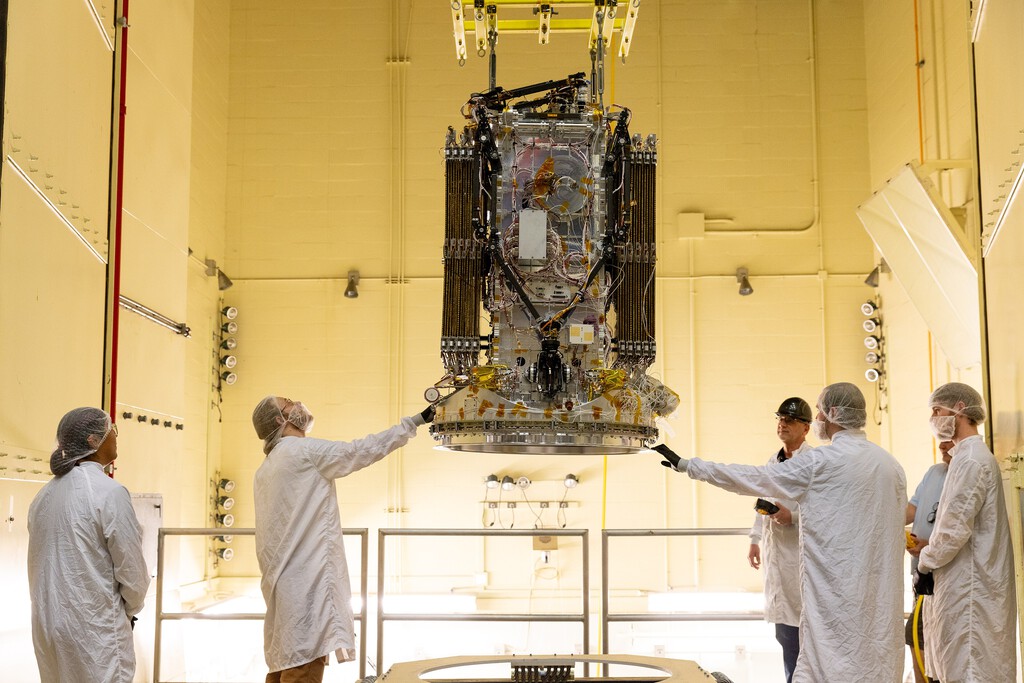
To make matters worse, the spacecraft's cold gas thrusters, used for fine control, also started acting up. This combination led to the uncontrolled spin. Additionally, communication between LINK and ground controllers has been intermittent, adding to the challenge of diagnosing and fixing the issues.
Both NASA and Katalyst have stated that they are slowly working to resolve the problem and hope that LINK can still reach its destination. However, as of now, the issue has not been fully resolved, so it's uncertain whether the telescope can be saved in time.
Why Is the Swift Telescope So Important?
The Neil Gehrels Swift Observatory is a NASA satellite dedicated to studying gamma-ray bursts and other high-energy cosmic phenomena. Launched in 2004, Swift has been instrumental in advancing our understanding of the universe's most powerful explosions.
However, the telescope's orbit is decaying, and without intervention, it was expected to re-enter Earth's atmosphere and burn up by 2026. The LINK mission was conceived as a way to boost Swift's orbit and extend its life, potentially for many more years of scientific discovery.
Swift's contributions to astronomy are significant, and its loss would be a blow to the scientific community. That's why NASA and Katalyst invested heavily in a rapid development and launch of LINK.
The Race Against Time
With LINK spinning out of control, the window to save Swift is closing. The spacecraft needs to be operational and able to perform a series of maneuvers to rendezvous with Swift and boost its orbit.
Every day that LINK remains unable to stabilize is a day lost in the race to save the telescope. Ground controllers are working around the clock to troubleshoot the reaction wheel and thruster issues, but the intermittent communication adds an extra layer of difficulty.
The mission team remains hopeful, but the situation is precarious. If LINK cannot be brought under control soon, Swift's fate may be sealed.
What's Next for LINK and Swift?
NASA and Katalyst are continuing their efforts to fix LINK. The team is analyzing telemetry data to understand the root cause of the failures and to develop workarounds. In the meantime, they are attempting to regain stable communication with the spacecraft. The longer history behind the story is traced in James Webb Finds a Young Galaxy That Stopped Spinning Too Early.
If LINK can be stabilized, the mission will proceed as planned: LINK will rendezvous with Swift and use its thrusters to raise the telescope's orbit. This would extend Swift's operational life and allow it to continue making groundbreaking observations. The background to this story is set out in NASA Abandons Swift Rescue, Turns Telescopes Back On for Final Data. A related thread runs through Spacecraft Rescue Mission for NASA Telescope Fails. Earlier coverage in NASA Voyager 2 Power Boost: Extending Interstellar Mission shows how the argument developed.
If the problems cannot be resolved, Swift will likely re-enter the atmosphere by 2026, ending a highly successful mission. The failure would also be a setback for Katalyst and NASA's efforts to demonstrate on-orbit servicing capabilities. A closer look at the same subject appears in Funniest Stories Of Rescue Pups Labeled As Certain Breed Turning Out To Be Different. Anyone following the wider picture can start with Middle East Crisis Spinning Out of Control, UN Chief Warns. The same theme surfaces in NASA Starliner: Astronauts Stranded 9 Months, NASA Still Trusts Boeing, which takes a different angle.
Key Takeaways from the LINK Mission Crisis
- LINK, a rescue spacecraft for NASA's Swift telescope, is spinning out of control due to reaction wheel and thruster failures.
- Communication with the spacecraft is intermittent, complicating recovery efforts.
- The Swift telescope was already at risk of re-entering Earth's atmosphere by 2026 without intervention.
- NASA and Katalyst are working to stabilize LINK, but the outcome remains uncertain.
- The mission highlights the challenges of rapid spacecraft development and on-orbit servicing.
Comparing LINK and Other Rescue Missions
| Mission | Objective | Status | Key Challenge |
|---|---|---|---|
| LINK | Boost Swift telescope's orbit | In crisis (spinning) | Reaction wheel and thruster failures |
| Hubble Servicing Missions | Repair and upgrade Hubble | Completed (5 missions) | Complex spacewalks |
| Northrop Grumman's MEV | Extend life of satellites | Operational | Docking with unprepared satellites |
The LINK mission is unique in its goal of rescuing a scientific telescope, but it shares similarities with other on-orbit servicing efforts. The challenges faced by LINK underscore the difficulties of operating in the harsh environment of space. Context on how this played out before sits in NASA Creates Emeritus Astronaut Title as Retirements Rise. A companion piece, NASA Sends Three Fully Autonomous Robots to the Moon, approaches the same subject from another angle.
FAQ
What is the LINK spacecraft?
LINK is a small spacecraft developed by Katalyst Space Technologies in partnership with NASA. Its mission is to rendezvous with the Neil Gehrels Swift Observatory and boost its orbit to extend its life.
Why is the Swift telescope in danger?
The Swift telescope's orbit is decaying due to atmospheric drag. Without a boost, it is expected to re-enter Earth's atmosphere and burn up by 2026.
What caused LINK to spin out of control?
Two of LINK's reaction wheels failed, and its cold gas thrusters also experienced problems. This led to an uncontrolled spin. Additionally, communication with the spacecraft has been intermittent.
Can LINK still save the Swift telescope?
NASA and Katalyst are working to stabilize LINK, but the outcome is uncertain. If the spacecraft can be brought under control, it may still be able to complete its mission. However, time is running out.
Browse the Shop
 Acacia frida deluxe solid wood bed frame |
Bedroom bench |
Bed chest drawers |
Lingerie dresser |
Frame base |
Mirror with jewelry storage |
30 Bathroom Vanity |
Memory foam queen mattress |
Mattresses for back pain |
Nightstand set of 2 |
Grand Goldman Shop |
Civil Lawyer
Deutschland Trikot WM 2026







