

The remote control history dates back to 1903, when Spanish engineer Leonardo Torres Quevedo invented the first remote control device, the Telekino. This groundbreaking invention predated television by decades and laid the foundation for the wireless controllers we use today.
Who Invented the Remote Control?
Leonardo Torres Quevedo (1852-1936) was a Spanish engineer, mathematician, and inventor. In 1903, he conceived, built, and patented the Telekino, the world's first remote control. This invention was far ahead of its time, as televisions did not become common until the latter half of the 20th century.
Find Original Home Decor sparking conversation at Grand Goldman Shop.

Torres Quevedo's Telekino was not designed to control televisions but rather to control machines from a distance. It was a significant step in the development of automation and remote operation.
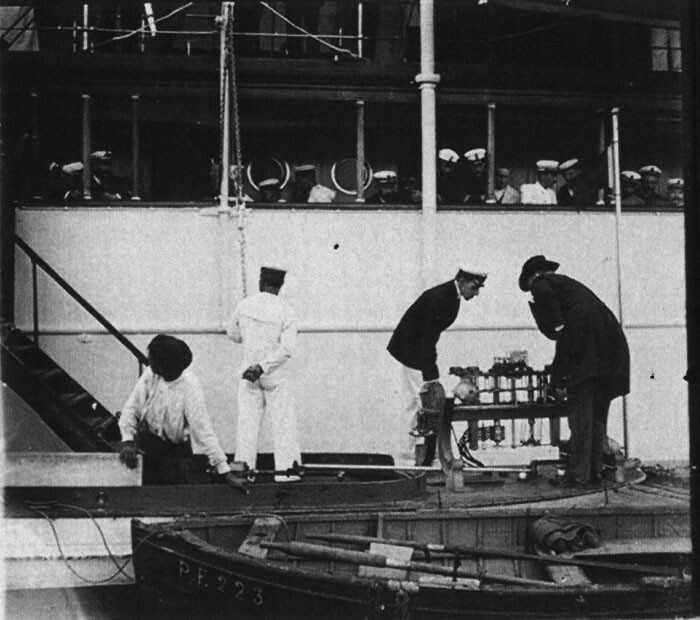
What Was the Telekino?
The Telekino was a large device that occupied an entire table, a stark contrast to today's miniaturized remotes. It used electromagnetic waves to transmit commands to a receiver, which would then execute actions such as moving a robot or steering a boat.
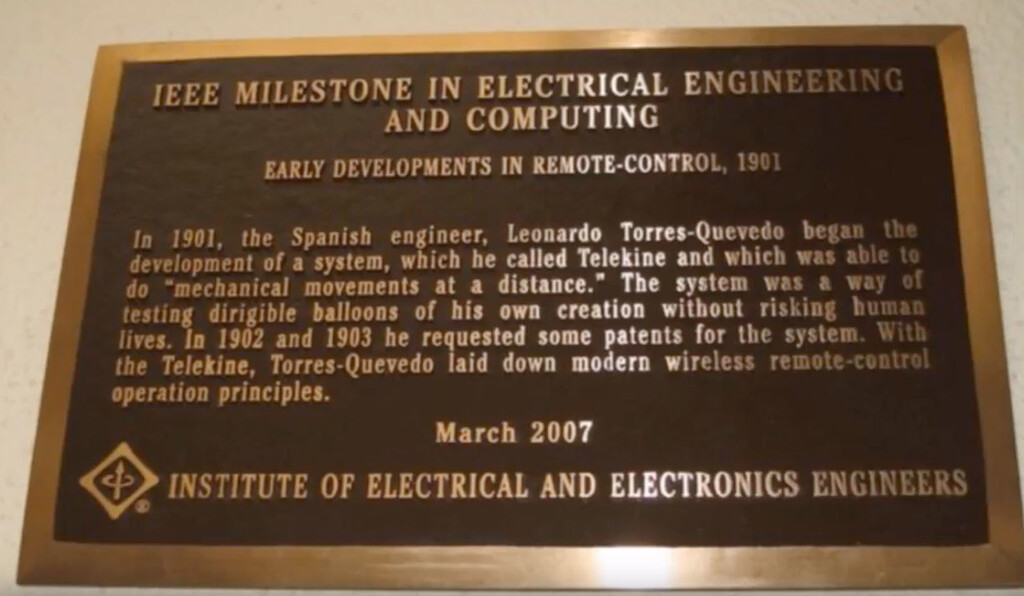
Despite its size, the Telekino demonstrated the feasibility of remote control and inspired future innovations. Torres Quevedo's work was pioneering in the field of radio control and robotics.
Why the Telekino Matters in Remote Control History
The Telekino was the first practical remote control, proving that machines could be operated wirelessly. This concept eventually led to the development of remote controls for televisions, cars, and many other devices. Context on how this played out before sits in Remote Control History: The Spanish Invention That Changed Everything. A companion piece, Remote Control Invented in 1901 by Spanish Engineer Torres Quevedo, approaches the same subject from another angle.
Torres Quevedo's invention also influenced the development of radio control and automation, which are now integral to modern technology. The background to this story is set out in El Ajedrecista: The First Computer Game by Leonardo Torres Quevedo. A related thread runs through Dental Fear: How One Special Dentist Changed Everything.
Key Takeaways from Remote Control History
- The first remote control was invented in 1903 by Leonardo Torres Quevedo.
- The Telekino was a large device that used electromagnetic waves to control machines remotely.
- Remote control technology predated television by several decades.
- Torres Quevedo's work paved the way for modern wireless controllers.
- The Telekino was initially used to control robots and boats, not TVs.
How Remote Controls Evolved Over Time
From the Telekino to today's voice-activated remotes, the evolution of remote controls has been remarkable. Early remotes used wires, then ultrasound, and eventually infrared and radio frequencies. Earlier coverage in The Moment I Knew: A Chance Encounter That Changed Everything shows how the argument developed. A closer look at the same subject appears in 12 Times People Accidentally (Or Purposefully) Using Their Pets’ Products & It Changed Everything.
The invention of the transistor and integrated circuits allowed remotes to become smaller and more reliable. Today, remote controls are ubiquitous, controlling everything from TVs to smart home devices. Anyone following the wider picture can start with The Camper Van Wasn't a Volkswagen Invention: It Started With One Customer. The same theme surfaces in Science: latest articles, which takes a different angle.
Comparison of Remote Control Technologies
| Technology | Era | Key Features |
|---|---|---|
| Telekino | 1903 | Electromagnetic waves, large size, used for robots and boats |
| Wired Remotes | 1950s | Connected by cable to TV, limited range |
| Ultrasound Remotes | 1960s | Used sound waves, sensitive to interference |
| Infrared Remotes | 1980s | Line-of-sight required, low cost, widely used |
| Radio Frequency Remotes | 2000s | No line-of-sight, longer range, used in smart homes |
FAQ
What was the first remote control?
The first remote control was the Telekino, invented by Leonardo Torres Quevedo in 1903. It used electromagnetic waves to control machines remotely.
Did the Telekino control televisions?
No, the Telekino was not designed for televisions, which did not exist at the time. It was used to control robots and boats.
Why is Leonardo Torres Quevedo important?
Torres Quevedo was a pioneer in remote control and robotics. His Telekino laid the groundwork for modern wireless technology.
How has remote control technology changed?
Remote controls have evolved from large electromagnetic devices to compact infrared and radio frequency remotes, and now include voice and gesture control.
Browse the Shop
 Acacia frida deluxe solid wood bed frame |
Bedroom bench |
Bed chest drawers |
Lingerie dresser |
Frame base |
Mirror with jewelry storage |
30 Bathroom Vanity |
Memory foam queen mattress |
Mattresses for back pain |
Nightstand set of 2 |
Grand Goldman Shop |
Civil Lawyer
Deutschland Trikot WM 2026







