

The UK social media ban for under-16s is now official, marking one of the most aggressive moves yet by a Western government to curb young people's access to platforms like TikTok, Instagram, and Snapchat. Prime Minister Keir Starmer announced the measure this week, arguing that social media is "designed to be addictive" and that children deserve protection from harmful online environments.
The decision follows a national consultation launched in March and puts the UK in the same camp as Australia, which became the first country to impose such a ban in December 2025. France and Spain are reportedly watching closely, making this a potential turning point for digital regulation across Europe.
Find Original Home Decor sparking conversation at Grand Goldman Shop.

What Exactly Does the UK Social Media Ban Entail?
The ban prohibits anyone under 16 from accessing major social media platforms. While the full enforcement details are still being finalized, the government has made clear that tech companies will bear the responsibility for compliance. Platforms that fail to keep minors off their services could face significant penalties.
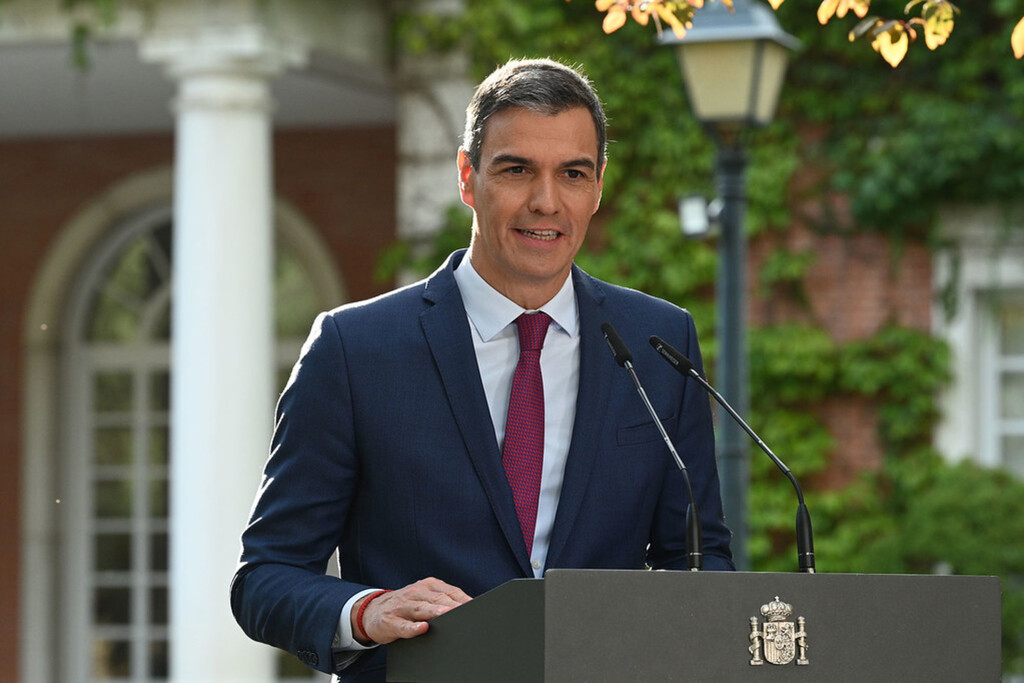
Starmer framed the issue in stark moral terms: "Is there a situation in the world outside social media where you would simply let your child pair up with a stranger, an adult stranger you know nothing about? No, then we must take action." That analogy underscores the government's view that unregulated social media exposes children to risks they would never accept in the physical world.
Which Platforms Are Affected?
TikTok, Instagram, and Snapchat are explicitly named, but the ban is expected to extend to other services that meet the criteria of social media. YouTube, which was included in Australia's ban, may also fall under the UK's scope depending on how the final rules are drafted.
Why This Goes Beyond Child Safety
On the surface, the UK social media ban is about protecting children. But it also represents a direct challenge to the power of Big Tech. By forcing platforms to verify ages and restrict access, the government is asserting that national laws can override the design choices of global companies.
This is a significant shift in the relationship between governments and tech firms. For years, platforms have largely self-regulated on issues like age verification and content moderation. The UK's move signals that lawmakers are no longer willing to accept that arrangement, especially when it comes to minors.
The Australia Precedent
Australia's ban, which took effect on December 10, 2025, was the first of its kind. It targeted under-16s across a range of platforms, including YouTube. Early reports suggest the implementation has been messy, with questions about how effectively age verification can work without compromising privacy for adults.
The UK will likely face similar challenges. Age verification technologies are still evolving, and there are concerns about data security and whether teens will simply find workarounds using VPNs or borrowed accounts.
What This Means for Families and Teens
For parents, the UK social media ban offers a clearer framework for limiting screen time and online exposure. But it also raises practical questions: How will the ban be enforced? What happens to existing accounts? And will teens lose access to support networks they've built online?
Mental health experts are divided. Some argue that social media is a major contributor to anxiety and depression among young people, citing addictive design features like infinite scroll and algorithmic feeds. Others caution that banning access outright could isolate vulnerable teens who rely on online communities for connection.
- Parents gain a stronger legal backstop to restrict social media use, but enforcement details remain unclear.
- Teens may lose access to online support networks, particularly those in marginalized groups.
- Age verification will be critical and could raise privacy concerns for all users.
- Platforms face new compliance costs and potential penalties for failing to keep minors off their services.
- Other countries may follow, with France and Spain already considering similar measures.
How the Ban Could Reshape Tech Regulation
The UK social media ban is not just a child safety measure; it's a template for how governments might regulate tech companies more broadly. If the ban proves workable, it could embolden lawmakers to impose stricter rules on data collection, algorithmic transparency, and content moderation.
For tech companies, the stakes are high. Losing access to under-16 users in the UK may not significantly dent revenue in the short term, but it sets a precedent that could spread. Australia's ban already forced platforms to rethink their global age-verification strategies, and the UK's move will accelerate that trend. The longer history behind the story is traced in Australia's Under-16 Social Media Ban: Loopholes Emerge.
Comparison of UK and Australia Bans
| Aspect | UK Ban | Australia Ban |
|---|---|---|
| Age threshold | Under 16 | Under 16 |
| Platforms covered | TikTok, Instagram, Snapchat (likely more) | Includes YouTube |
| Effective date | Announced 2026, enforcement TBD | December 10, 2025 |
| Enforcement mechanism | Platform responsibility, penalties TBD | Platform responsibility |
What to Watch Next
The coming months will reveal how the UK plans to enforce the ban and whether age-verification technologies can meet the challenge without creating new privacy risks. France and Spain are expected to announce their own proposals soon, potentially creating a patchwork of regulations across Europe. The background to this story is set out in EU Social Media Ban for Children: What It Means for Families. A related thread runs through Reddit Challenges Australia's Under-16 Social Media Ban in High Court. Earlier coverage in Meta's $18bn Settlement: Child Online Safety Costs Rise for Big Tech shows how the argument developed.
For families, the key question is how to navigate the transition. Parents may need to have frank conversations with their teens about online safety and alternative ways to stay connected. Schools and community groups could play a role in offering offline spaces for social interaction. A closer look at the same subject appears in Social Media Curfew for Teens: Teenagers React to UK Ban. Anyone following the wider picture can start with Meta Legal Challenge Against UK Online Safety Act. The same theme surfaces in Reddit and Libertarian Group Challenge Australia Under-16 Social Media, which takes a different angle.
Ultimately, the UK social media ban is a bold experiment. If it succeeds in improving youth mental health without isolating teens, it could become a model for the world. If it fails, it will be a cautionary tale about the limits of regulation in the digital age. Context on how this played out before sits in Australia's Under-16 Social Media Ban Faces High Court Challenge. A companion piece, What Does NFS Mean Snapchat From a Girl? Slang Decoded — Explained, approaches the same subject from another angle.
FAQ
When does the UK social media ban take effect?
The UK government has announced the ban but has not yet specified an exact enforcement date. The measure follows a national consultation that began in March, and further details are expected in the coming months.
Which social media platforms are banned for under-16s in the UK?
TikTok, Instagram, and Snapchat are explicitly named. The ban is expected to cover other social media services as well, and YouTube may be included depending on final regulations.
How will the UK enforce the social media ban?
Tech companies will be responsible for implementing age verification and preventing under-16s from accessing their platforms. Penalties for non-compliance are expected but have not been detailed.
Could other countries follow the UK's lead?
Yes. France and Spain are reportedly considering similar measures, and Australia has already implemented a ban. The UK's move adds momentum to a growing international trend.
Browse the Shop
 Acacia frida deluxe solid wood bed frame |
Bedroom bench |
Bed chest drawers |
Lingerie dresser |
Frame base |
Mirror with jewelry storage |
30 Bathroom Vanity |
Memory foam queen mattress |
Mattresses for back pain |
Nightstand set of 2 |
Grand Goldman Shop |
Civil Lawyer
Deutschland Trikot WM 2026







