

In La Canonja, just a few kilometers from Tarragona, lies a site that has been making waves for two decades: the Barranc de la Boella. The IPHES-CERCA has been systematically excavating it since 2007. It's interesting for several reasons. First, its age: its stone tools and faunal remains date back around one million years. Second, because the team argues that this is where the Acheulean, the handaxe technology, first appears in Europe. All that already makes for a good documentary. However, researchers insist on an even more powerful nuance: the hominins who left those pieces did not live there.
What Have They Found at Barranc de la Boella?
The site is divided into Cala 1 and La Mina. Both have a chronology close to one million years. According to researcher Josep Vallverdú, the ravine was a rambla that flowed into the marshes of the Francolí River. The twentieth campaign yielded about 300 pieces of fauna and tools.
Find Original Home Decor sparking conversation at Grand Goldman Shop.

And there are two new developments: in Cala 1, indications of a rhinoceros bone appear. In La Mina, a possible hippopotamus tooth. These add to previous finds: a mammoth skinned by hominins, in 2007 and 2018, and a fragment of a bear skull, in 2024.
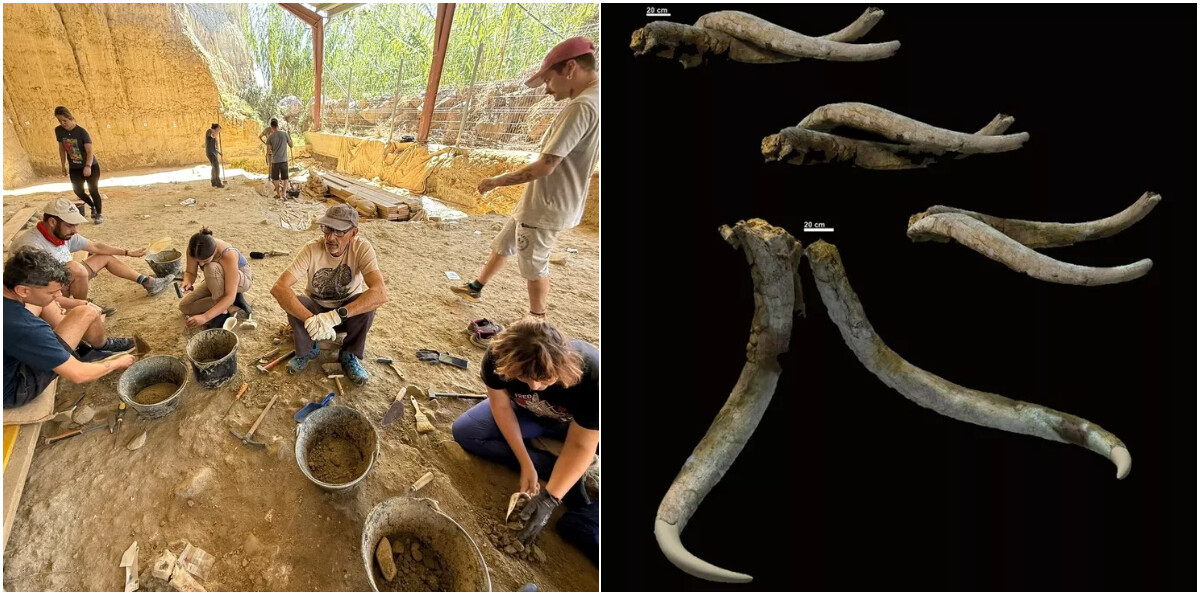
A Supermarket, Not a Home
Apparently, no one lived here. The director of the excavations explains that the hominins did not reside at the site but came to this place to exploit the resources. It was a kind of supermarket for them. They came to scavenge or hunt, to obtain meat and raw materials, and then left.
This interpretation is based on the type of remains found: animal bones with cut marks and stone tools, but no evidence of domestic structures or long-term occupation. The site was likely a seasonal camp or a place where hominins processed carcasses.
Why Is This Site Important?
The Barranc de la Boella is key to understanding the first human settlements in Europe. The presence of Acheulean tools at one million years old challenges the idea that this technology arrived later. It also provides insight into the behavior of early hominins: they were capable of planning and cooperating to exploit large animals. Context on how this played out before sits in 1-Million-Year-Old Site in Tarragona Reveals Early Human Life.
The site has yielded evidence of mammoth exploitation, which required complex strategies. The recent findings of rhinoceros and hippopotamus remains suggest a diverse fauna in the area, indicating a rich ecosystem. The background to this story is set out in Cats Who Were Caught In The Act When Their Humans Came Home Early And Surprised Them. A related thread runs through Trending: latest articles.
Key Takeaways
- The Barranc de la Boella site in Tarragona is approximately one million years old.
- It provides evidence of the earliest Acheulean technology in Europe.
- Hominins did not live at the site but used it as a resource exploitation area.
- Recent excavations have uncovered about 300 pieces, including a possible rhinoceros bone and hippopotamus tooth.
- The site offers insights into the diet and behavior of early humans.
Comparison of Finds at Barranc de la Boella
| Find | Location | Year | Significance |
|---|---|---|---|
| Mammoth with cut marks | Cala 1 | 2007, 2018 | Evidence of hominin exploitation of large mammals |
| Bear skull fragment | La Mina | 2024 | Provides information on fauna and possibly hominin activity |
| Rhinoceros bone | Cala 1 | 2024 | New evidence of fauna exploited or present |
| Hippopotamus tooth | La Mina | 2024 | Indicates presence of water and diverse ecosystem |
What to Watch Next
Researchers will continue excavating and analyzing the finds. The possible rhinoceros bone and hippopotamus tooth will be studied to confirm their nature and association with hominin activity. The team also hopes to find more evidence of Acheulean tools to solidify the claim of their early presence in Europe. Earlier coverage in Neanderthal Woodworking: 40,000-Year-Old Craft Unearthed in Spain shows how the argument developed. A closer look at the same subject appears in Africa's 2,800-Year-Old Palace: The First Skyscraper.
As excavations continue, the Barranc de la Boella is expected to yield more insights into the lifeways of early Europeans. The site's importance lies not only in its age but in the behaviors it reveals: these hominins were skilled hunters and scavengers who knew how to exploit a landscape. Anyone following the wider picture can start with Lead Smelting in Iberia Began 900 Years Before Phoenicians. The same theme surfaces in Neanderthals Were Also Woodworkers, New Study Reveals, which takes a different angle.
FAQ
What is the Barranc de la Boella?
What is the Barranc de la Boella?
The Barranc de la Boella is an archaeological site near Tarragona, Spain, dating to about one million years ago. It is known for evidence of early human activity, including Acheulean tools and butchered animal remains.
Why is the site significant?
It provides some of the earliest evidence of Acheulean technology in Europe and offers insights into the behavior of early hominins, who used the site as a resource exploitation area rather than a living site.
What recent discoveries have been made?
In the latest campaign, about 300 pieces were recovered, including a possible rhinoceros bone and a hippopotamus tooth. These add to previous finds like a butchered mammoth and a bear skull fragment.
Did hominins live at the site?
No, researchers believe hominins did not live there but visited the site to exploit resources, similar to a supermarket. The evidence suggests short-term activities like butchering and tool-making.
Browse the Shop
 Acacia frida deluxe solid wood bed frame |
Bedroom bench |
Bed chest drawers |
Lingerie dresser |
Frame base |
Mirror with jewelry storage |
30 Bathroom Vanity |
Memory foam queen mattress |
Mattresses for back pain |
Nightstand set of 2 |
Grand Goldman Shop |
Civil Lawyer
Deutschland Trikot WM 2026







