

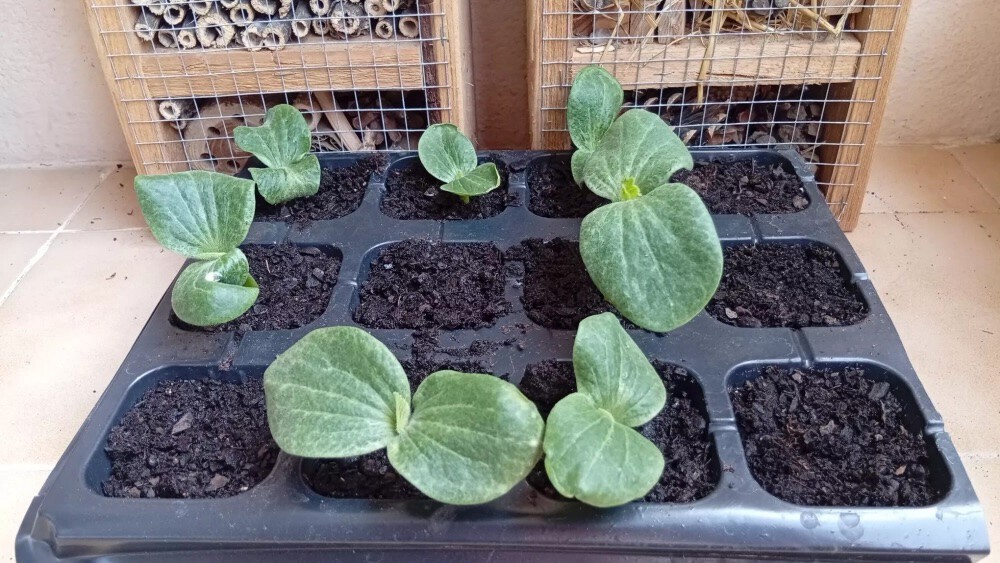
An Aragonese farmer has donated the seeds of two traditional pumpkin varieties that his family has conserved for 200 years, in a bid to prevent them from disappearing. Francisco Bescós, 73, handed over germinated plants of the yellow Panzano pumpkin and the Rabique pumpkin to Ismael Ferrer, a cooking teacher and expert in Aragonese horticulture.
The story, reported by local media, highlights the fragile thread that connects family farming traditions to broader food biodiversity. Bescós, who has worked the land in Panzano (Huesca) for decades, decided to pass on his most precious agricultural legacy as he can no longer tend the crops himself.
Find Original, High-end Home Decor that spark conversation at Grand Goldman Shop.
The Unique Terrain of Huertas de Formiga
At the foot of the Sierra de Guara, in the Huertas de Formiga, two springs emerge just meters apart. One yields fresh water; the other, salt water. Both merge and irrigate the terraced plots where Bescós grew his vegetables, creating conditions that Ismael Ferrer claims produce unique flavors found nowhere else in Spain.
Ferrer, who wrote about Bescós's dedication to his garden, attributes the distinctive taste of his produce to this rare mix of waters. The soil and water combination, along with generations of careful selection, gave rise to pumpkin varieties adapted to the specific microclimate of the region.
Two Varieties, One Heritage
The yellow Panzano pumpkin and the Rabique pumpkin have been grown by Bescós's family since at least the early 19th century. According to Bescós, who has also studied local ethnography, the varieties have remained unchanged for 200 years. Their shapes, colors, and flavors are a living record of the agricultural practices and culinary preferences of the area.
Now, with Bescós unable to continue planting, these varieties face the risk of extinction. His decision to give away the germinated plants ensures that the genetic material and the knowledge associated with them will not be lost.
Who Is Taking Over the Legacy?
Ismael Ferrer is more than a cooking teacher; he directs the gastronomic section of the CIGA (Center for Agri-food Research of Aragon) and is the author of the map of legumes and vegetables of Aragon. This map identifies over 100 varieties across the 33 regions of Aragon, serving as a critical tool for preserving agricultural biodiversity.
Ferrer has also led the recovery of other traditional varieties, making him the ideal custodian for Bescós's pumpkins. His expertise in both gastronomy and local horticulture ensures that the seeds will be planted, studied, and potentially reintroduced to the market.
Why This Matters for Food Security
The loss of traditional varieties is not just a cultural loss; it's a threat to food security. Heirloom seeds often carry genetic traits that help them resist pests, adapt to local climates, and thrive with fewer inputs. When they disappear, we lose that resilience.
Bescós's gift is a small but significant act of conservation. It also underscores the role of elderly farmers as guardians of biodiversity, a role that often goes unrecognized until it's almost too late.
Key Takeaways from This Seed-Saving Story
- Francisco Bescós donated germinated plants of two pumpkin varieties his family has grown for 200 years.
- The unique mix of fresh and salt water at Huertas de Formiga gives the pumpkins distinctive flavor.
- Ismael Ferrer, an expert in Aragonese horticulture, will continue the legacy.
- The donation helps preserve agricultural biodiversity and local food heritage.
- Elderly farmers play a crucial role in maintaining heirloom varieties.
Comparing the Two Pumpkin Varieties
| Variety | Origin | Characteristics | Conservation Status |
|---|---|---|---|
| Yellow Panzano | Panzano, Huesca | Yellow skin, traditional flavor, adapted to local soil | Critically endangered |
| Rabique | Panzano, Huesca | Distinct shape and taste, linked to family tradition | Critically endangered |
The table summarizes the limited information available about these varieties. Both are on the brink of disappearing from cultivation, which is why Bescós's donation is timely.
What Happens Next for These Seeds?
Ferrer will now cultivate the plants and study their properties. Given his role at CIGA, he may incorporate them into research on local varieties and potentially distribute seeds to other farmers or chefs interested in preserving them. The background to this story is set out in Gaza Farming Project Offers Hope with Local Seed Bank. A related thread runs through Neighbor Trespasses Into Woman’s Yard, Takes Her Dog And Gives It Away To Friend. Earlier coverage in Redditor Refuses To Give Away Her Dog That Could Save Her Brother-In-Law’s Life, Asks If They Are Wrong shows how the argument developed.
The story also raises awareness about the importance of seed banks and community efforts to safeguard heirloom varieties. While institutional seed banks exist, the knowledge held by farmers like Bescós is irreplaceable. A closer look at the same subject appears in Husband Is Tired Of His Wife Giving Away His Personal Property To Her Family, Finally Snaps At Her. Anyone following the wider picture can start with Trending: latest articles. The same theme surfaces in Madrid's Oldest Bookstore Pérgamo Forced to Close After 80 Years, which takes a different angle.
As consumers, supporting local farmers and choosing traditional varieties can help create demand and keep these foods on our tables. Every purchase of an heirloom vegetable is a vote for biodiversity. Context on how this played out before sits in Best Smart Plugs: How They Work and 7 Top Models to Save Energy. A companion piece, Farmer Uncovers 3,200-Year-Old Statue of Ramses II in Egypt, approaches the same subject from another angle.
FAQ
What did Francisco Bescós donate?
He donated germinated plants of two traditional pumpkin varieties: the yellow Panzano and the Rabique. These seeds have been in his family for 200 years.
Why are these pumpkins special?
They are grown in a unique environment where fresh and salt water springs mix, which locals believe gives them a distinctive flavor. They are also heirloom varieties adapted to the region.
Who is Ismael Ferrer?
He is a cooking teacher and director of the gastronomic section of CIGA. He created the map of legumes and vegetables of Aragon, which documents over 100 local varieties.
How can I help preserve traditional varieties?
You can support local farmers by buying heirloom produce, participate in seed-saving initiatives, and raise awareness about the importance of agricultural biodiversity.
Browse the Shop
 Acacia frida deluxe solid wood bed frame |
Bedroom bench |
Bed chest drawers |
Lingerie dresser |
Frame base |
Mirror with jewelry storage |
30 Bathroom Vanity |
Memory foam queen mattress |
Mattresses for back pain |
Nightstand set of 2 |
Grand Goldman Shop |
Civil Lawyer
Deutschland Trikot WM 2026







