

The Korean language split is accelerating. After more than seven decades of division, the Korean spoken in North and South Korea is no longer the same, with at least a third of everyday vocabulary now differing between the two countries. This linguistic divergence, driven by political isolation and contrasting global influences, offers a striking case study in how language evolves under pressure.
What Happened: The Korean Language Split
A recent study revealed that 45% of surveyed North Korean defectors had trouble understanding South Korean dialogue, and 1% could not understand it at all. Linguists estimate that at least one-third of common vocabulary is now different, especially in professional and business contexts.
Find Original Home Decor sparking conversation at Grand Goldman Shop.

The root cause is clear: North Korea has kept its language relatively pure, with only minor grammatical influences from Chinese and Russian. South Korea, by contrast, has eagerly adopted foreign loanwords, especially from English, and coined new terms for modern concepts.

Why It Matters: More Than Just Words
Language is a carrier of culture and identity. As the two Koreas drift apart linguistically, the gap in mutual understanding widens, making reconciliation and cooperation more difficult. For businesses, humanitarian organizations, and families separated by the border, communication barriers add another layer of complexity to an already fraught relationship.
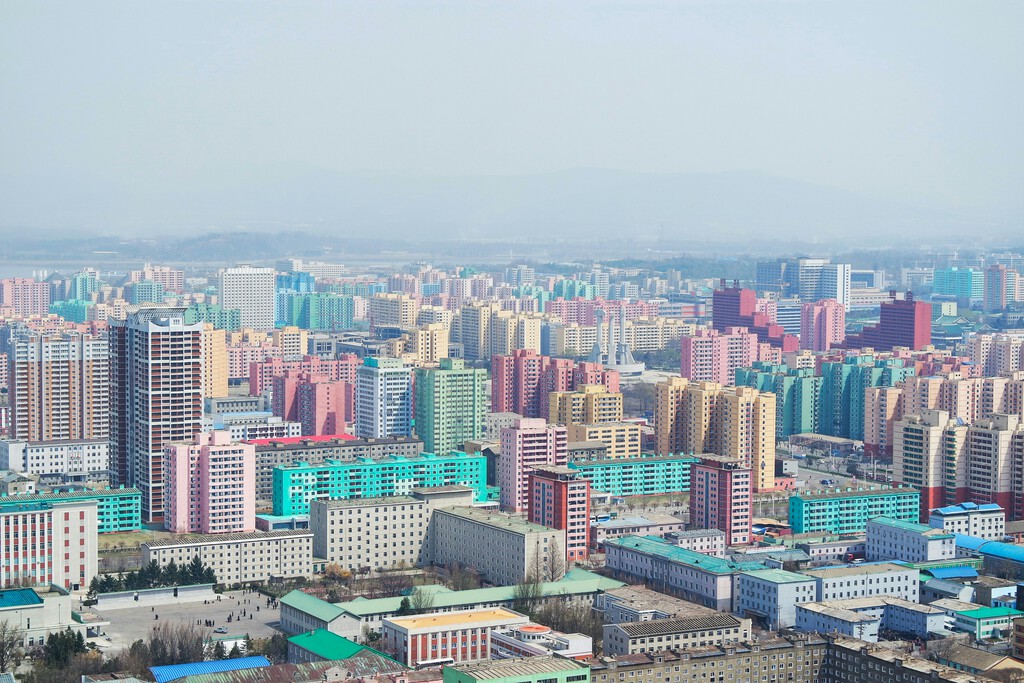
Moreover, the language split mirrors the broader societal divide. North Korea's isolation has preserved older forms but also cut it off from global linguistic innovation. South Korea's integration into the global economy has enriched its language but distanced it from its northern neighbor.

Key Takeaways
- Vocabulary divergence: At least one-third of everyday words differ between North and South Korean.
- Comprehension gap: 45% of North Korean defectors struggle to understand South Korean speech.
- Foreign influence: South Korean has absorbed many English loanwords; North Korean retains more Chinese and Russian influences.
- Professional impact: Business and technical terminology show the greatest divergence.
- Future outlook: Without increased contact, the languages may become mutually unintelligible in key domains.
How the Languages Diverge: A Comparison
The table below summarizes the main differences between North and South Korean language usage.
| Aspect | North Korea | South Korea |
|---|---|---|
| Foreign loanwords | Minimal; mainly Chinese and Russian | Extensive; many English loanwords |
| Vocabulary for modern concepts | Often coined from native roots | Frequently borrowed from English |
| Comprehension of other dialect | Low among defectors | Low among defectors |
| Business terminology | State-defined, isolated | Globalized, English-influenced |
Who Is Affected: Defectors, Families, and Businesses
The people most affected are North Korean defectors resettling in South Korea. They face not only cultural adjustment but also a language barrier that can hinder employment and social integration. Families separated by the border also struggle to communicate across the divide. The longer history behind the story is traced in Medieval Spice Obsession: Why Banquet Food Was Inedible Today. More on the surrounding debate is collected in North Korea's Nuclear Ambitions: What It Means for Global Energy Security.
Businesses eyeing future engagement with North Korea must prepare for linguistic challenges. Interpreters and translators will need specialized training to bridge the gap, and companies should invest in cross-cultural communication strategies. The background to this story is set out in South Korea Angry at Ukraine Over North Korean POWs Transfer. A related thread runs through Esperanto's Linguistic Flaws: Why an International Language Still. Earlier coverage in Esperanto's Linguistic Flaws: Why It Fails as a Universal shows how the argument developed.
What to Watch Next: The Future of Korean
As long as the two Koreas remain divided, their languages will continue to evolve separately. South Korean will likely absorb more English terms, while North Korean may further develop its own terminology. The longer the division lasts, the harder reunification will be—not just politically, but linguistically. A closer look at the same subject appears in Trump Cuts Korea Drills Amid North Korea Battlefield Lessons. Anyone following the wider picture can start with North Korea Fortifies Border With South Korea: DMZ Mine Threat. The same theme surfaces in South Korea Demands Apology After North Korea Mine Blast, which takes a different angle.
Linguists and policymakers should monitor this divergence closely. Language is a living record of history, and the Korean split is a powerful reminder of how political boundaries can reshape the way people speak. Context on how this played out before sits in North Korea to Restart Propaganda Loudspeakers at South Korea Border. A companion piece, Trump Cuts US-South Korea Military Drills Amid North Korea Threats, approaches the same subject from another angle.
FAQ
How different are North and South Korean languages today?
They are significantly different. At least one-third of common vocabulary has diverged, and 45% of North Korean defectors report difficulty understanding South Korean speech. The gap is most pronounced in professional and technical terms.
Why did the Korean language split?
The split is a result of over 70 years of political division. North Korea's isolation led to a purer form with Chinese and Russian influences, while South Korea's global integration brought in many English loanwords and new coinages.
Can North and South Koreans understand each other?
Most can understand basic conversation, but comprehension drops sharply with complex or modern topics. The 1% who cannot understand at all highlights the risk of further divergence.
What does this mean for Korean reunification?
Linguistic divergence poses an additional challenge to reunification. Even if political unification occurs, significant efforts will be needed to bridge the language gap through education and exchange.
Browse the Shop
 Acacia frida deluxe solid wood bed frame |
Bedroom bench |
Bed chest drawers |
Lingerie dresser |
Frame base |
Mirror with jewelry storage |
30 Bathroom Vanity |
Memory foam queen mattress |
Mattresses for back pain |
Nightstand set of 2 |
Grand Goldman Shop |
Civil Lawyer
Deutschland Trikot WM 2026







