

When planning time off, many people wonder whether long vacations or short breaks are better for mental health and rest. The debate is common in Spain, where workers get at least 30 calendar days of vacation, and it sparks tensions among colleagues. Some prefer a long, uninterrupted pause to forget work stress and travel far, while others prefer to spread out their days for several short getaways. But what does science say?
Experts have weighed in, and their answer might surprise you. The question was recently posed by physician Antelm Pujol on Twitter, garnering hundreds of thousands of views and over 600 shares, showing just how much interest this topic generates. With limited vacation time, managing it wisely is crucial for maximizing rest and well-being.
Find Original Home Decor sparking conversation at Grand Goldman Shop.

The Science of Vacation Length and Mental Health
Research on vacation length and mental health suggests that the benefits of a vacation may fade quickly after returning to work. Studies have shown that a single long vacation may not be enough to sustain well-being over the long term. Instead, the frequency of breaks might matter more than the duration.
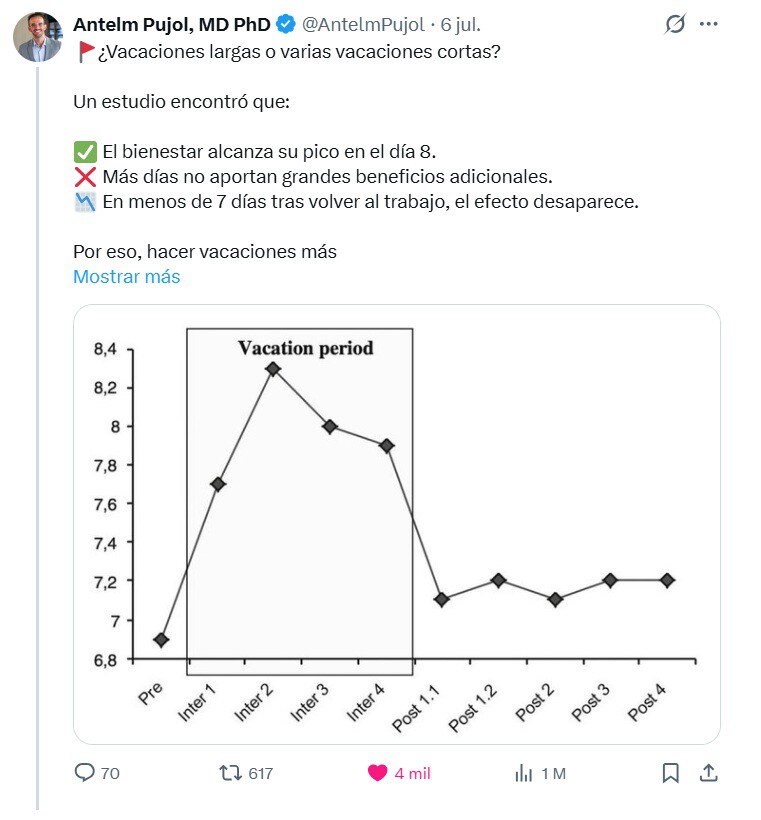
According to experts, short, frequent breaks can provide more consistent relief from stress. They allow for regular recovery periods, preventing burnout and maintaining mental freshness. On the other hand, long vacations offer a deeper disconnection, which can be beneficial for those who need a complete reset.

Key Factors in Choosing Vacation Length
Several factors influence whether long or short vacations work best for you. Personal preferences, job demands, family situation, and financial resources all play a role. For instance, if your job is highly stressful, a longer break might be necessary to truly unwind. If you have young children, shorter, more frequent trips might be more practical.
- Frequency over duration: Taking multiple short breaks throughout the year can help maintain mental well-being.
- Deep disconnection: Long vacations allow for a more thorough break from work-related stress.
- Personal circumstances: Family, finances, and job stress influence the ideal vacation length.
- Recovery time: Short breaks may not provide enough time to fully recover from chronic stress.
- Post-vacation blues: The positive effects of a long vacation may diminish quickly upon return to work.
Comparing Long Vacations and Short Breaks
To help you decide, here's a comparison of long vacations and short breaks based on key criteria. This table summarizes the potential benefits and drawbacks of each option.
| Aspect | Long Vacations (e.g., 3 weeks) | Short Breaks (e.g., 5 days) |
|---|---|---|
| Stress recovery | High – allows deep relaxation | Moderate – limited recovery time |
| Frequency | Low – once a year | High – multiple times a year |
| Cost | Often higher (travel, accommodation) | Can be lower if staying local |
| Impact on work | Longer absence may increase workload upon return | Less disruption to work flow |
| Mental health benefits | Intense but may fade quickly | Consistent but less intense |
As the table shows, both options have merits. The best choice depends on your individual needs and circumstances. Experts suggest that a mix of both might be ideal: a longer vacation for deep rest and several short breaks to recharge throughout the year.
Expert Recommendations for Maximizing Rest
Physician Antelm Pujol and other experts emphasize that the quality of rest matters more than the quantity. Simply taking time off is not enough; you need to engage in activities that truly disconnect you from work. Whether it's a long trip to a faraway destination or a short weekend getaway, the key is to fully immerse yourself in relaxation.
They also caution against the trap of overplanning. A long vacation packed with activities can be just as stressful as work. Instead, aim for a balance of exploration and downtime. Similarly, short breaks should be used to unwind, not to catch up on chores or other responsibilities.
How to Structure Your Vacation Days
If you have 30 days, consider splitting them into two or three shorter breaks plus one longer vacation. For example, take a two-week vacation in the summer and use the remaining days for long weekends throughout the year. This approach combines the benefits of deep disconnection with regular recovery periods. The longer history behind the story is traced in Renault Symbioz Full Hybrid E-Tech: 4 Family Road Trip Game Changers.
Another strategy is to align short breaks with public holidays to maximize your time off without using too many vacation days. This can provide frequent respites without sacrificing a longer trip. The background to this story is set out in Mental Health Overdiagnosis Review: Funding Gap Sparks Debate. A related thread runs through Italian Doctor Retires at 67, Donates 142 Vacation Days to Colleagues. Earlier coverage in 20 Loyal Pet Animals Making Owners Wonder Whether They Deserve All This Love shows how the argument developed.
What to Watch Next: The Future of Vacation Planning
As more research emerges on the mental health benefits of vacations, companies may start to rethink their time-off policies. Some organizations are already experimenting with unlimited vacation or mandatory minimum breaks. The goal is to create a culture that values rest and recognizes its impact on productivity and well-being. A closer look at the same subject appears in Rave Health Benefits for Middle-Aged Women: A Mental Health Secre. Anyone following the wider picture can start with Boss Expects Female Employee To Work 24/7 Like Her Male Colleagues, Receives A Reality Check. The same theme surfaces in Diego Gómez's Wonder Goal Proves Fans Still Love a Big Kick, which takes a different angle.
For individuals, the takeaway is clear: be intentional about your vacation time. Whether you choose long vacations or short breaks, prioritize activities that recharge you. And remember that rest is not a luxury—it's essential for your mental health. Context on how this played out before sits in Inflammation and Mental Health: The Cytokine Connection. A companion piece, Female Footballers Retirement Crisis: Financial and Mental Health, approaches the same subject from another angle.
FAQ
Are long vacations better for mental health than short breaks?
It depends on individual factors. Long vacations offer deep disconnection but their benefits may fade quickly. Short breaks provide more frequent recovery but may not allow for full stress relief. Experts suggest a combination of both.
How can I maximize the mental health benefits of my vacation?
Focus on quality rest and true disconnection from work. Avoid overplanning and choose activities that relax you. Whether you take a long vacation or short breaks, be intentional about your time off.
What is the ideal vacation length according to experts?
There is no one-size-fits-all answer. Experts recommend considering your stress levels, job demands, and personal preferences. Some suggest taking multiple short breaks plus one longer vacation to balance frequent recovery with deep rest.
Do vacation benefits last after returning to work?
Research indicates that the positive effects of a vacation can diminish within a few weeks. However, frequent short breaks may help sustain well-being over time by providing regular recovery periods.
Browse the Shop
 Acacia frida deluxe solid wood bed frame |
Bedroom bench |
Bed chest drawers |
Lingerie dresser |
Frame base |
Mirror with jewelry storage |
30 Bathroom Vanity |
Memory foam queen mattress |
Mattresses for back pain |
Nightstand set of 2 |
Grand Goldman Shop |
Civil Lawyer
Deutschland Trikot WM 2026







