

Why does the United States have fewer elevators than Spain despite a population seven times larger? The answer lies not in technology but in a decades-old building standard that made American elevators much larger and more expensive, ultimately shaping how housing is built.
In Europe, taking an elevator up four or five floors is routine. In the US, thousands of low-rise residential buildings still rely solely on stairs. This paradox is striking: Spain, with a population roughly seven times smaller, has more elevators than the United States.
Find Original Home Decor sparking conversation at Grand Goldman Shop.

The Elevator Gap: US vs. Spain
The United States, one of the world's richest and largest countries, has fewer elevators per capita than any other major developed economy. The contrast with Spain is especially stark: although the US population is about seven times that of Spain, its elevator stock is smaller.
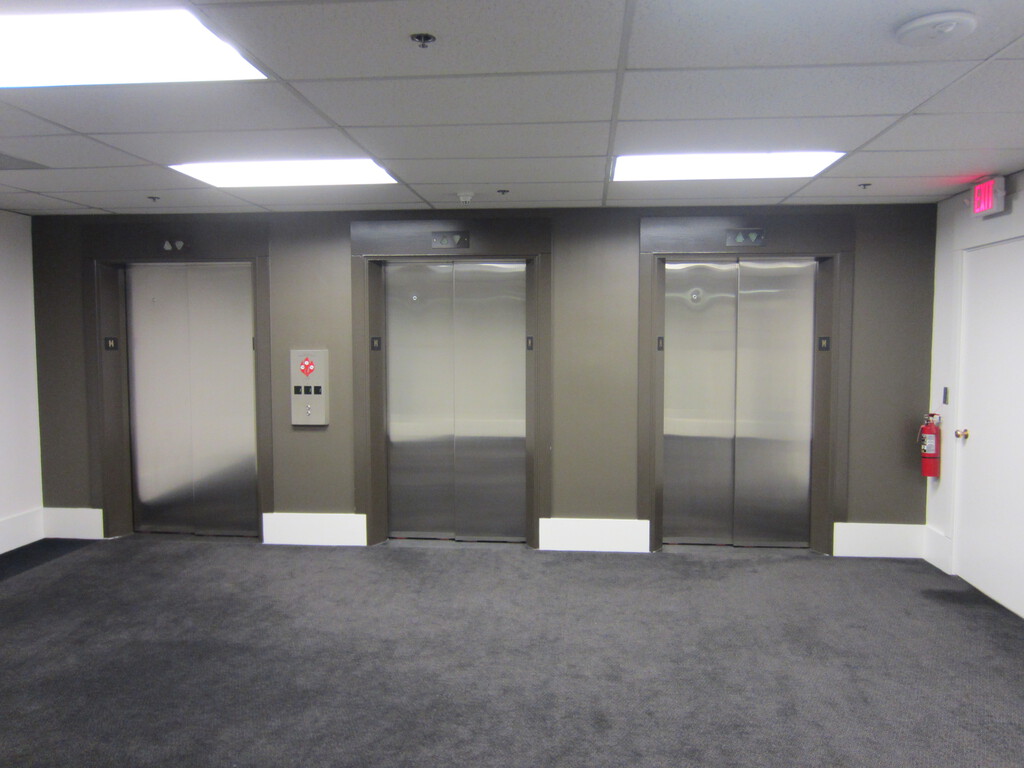
For many experts, this anomaly explains why so many three-, four-, or five-story buildings lack an element that Europeans consider almost essential.
The Root Cause: Size and Cost
The origin lies in size. As reported by The Washington Post, part of the problem stems from a technical standard that made American elevators much larger and more expensive than their European or Asian counterparts.
Cabins are typically designed to accommodate a medical stretcher, which requires a much larger floor area than a standard passenger elevator. This seemingly minor requirement has far-reaching consequences.
Why Stretcher Access Matters
In the US, building codes often mandate that elevators be large enough to fit a stretcher, ensuring that emergency medical services can transport patients vertically without obstruction. While this is a laudable safety goal, it comes at a cost.
Larger elevators require more space, more materials, and more complex engineering. In low-rise buildings, the added expense can be prohibitive, leading developers to skip elevators altogether.
How Regulation Shaped US Housing
The stretcher requirement is not the only factor, but it is a significant one. Over decades, these regulations have influenced the design of residential buildings, especially in suburban and rural areas where low-rise construction is common.
In contrast, European countries like Spain have smaller elevator standards, making them cheaper to install and maintain. As a result, elevators are ubiquitous even in older buildings.
The Role of Density and Urban Planning
Urban planning also plays a role. European cities tend to be denser, with more multi-family buildings that justify the cost of elevators. In the US, sprawling suburbs and single-family homes dominate, reducing the demand for elevators.
However, the regulatory difference remains a key driver. Even in denser US cities, the cost of installing a stretcher-sized elevator can be a barrier.
The Impact on Accessibility and Aging
The lack of elevators has real consequences for residents, particularly the elderly and people with disabilities. In buildings without elevators, mobility-impaired individuals may be effectively confined to their homes.
As the US population ages, this issue becomes more pressing. Many older Americans live in low-rise buildings without elevators, limiting their ability to age in place.
What About Retrofitting?
Retrofitting existing buildings with elevators is possible but expensive, especially when the required size is larger. Some cities offer incentives, but progress is slow.
In contrast, Spain's smaller elevator standard makes retrofits more feasible, contributing to higher elevator density. The longer history behind the story is traced in Why the US Has Fewer Elevators Than Spain Despite 7x Population.
Key Takeaways
- The US has fewer elevators per capita than Spain despite a much larger population.
- American building codes often require elevators large enough for a medical stretcher, increasing costs.
- These regulations have discouraged elevator installation in low-rise residential buildings.
- European countries like Spain have smaller, cheaper elevator standards, leading to higher adoption.
- The lack of elevators poses accessibility challenges, especially for the elderly and disabled.
Comparison of Elevator Standards
| Country | Typical Elevator Size | Stretcher Requirement | Elevators per 1,000 People |
|---|---|---|---|
| United States | Large (stretcher-capable) | Often required | Low |
| Spain | Smaller | Not typically required | High |
| Germany | Smaller | Varies | Moderate to High |
| Japan | Smaller | Not required | High |
Note: Elevator density figures are illustrative based on available data.
What to Watch Next
As the US grapples with an aging population and a housing crisis, the elevator gap may come under scrutiny. Some advocates are pushing for code changes that allow smaller elevators in certain buildings, while maintaining safety standards. The background to this story is set out in Children's Care Homes Rely on Committed People, Not Profit. A related thread runs through EU 2G and 3G Shutdown: Impact on Cars and Elevators. Earlier coverage in Czechoslovak Office Desks of 1937: Mechanical Elevators for Clerks shows how the argument developed.
Others argue that the stretcher requirement is essential for emergency preparedness and should not be relaxed. The debate is likely to continue as cities strive to become more accessible and inclusive. A closer look at the same subject appears in Trending: latest articles. Anyone following the wider picture can start with Madrid's Street Bench Shortage Prompts 1,602 New Seats. The same theme surfaces in Madrid's La Moraleja Luxury Urbanization Fights 47-Meter Power Tower, which takes a different angle.
For now, the disparity between the US and Spain serves as a reminder of how building codes can shape the built environment for generations. Context on how this played out before sits in Retirement Age 2026: Minimum Age and How to Know When You Can Retire. A companion piece, Can You Use a Deceased Person's Money to Pay for Their Funeral, approaches the same subject from another angle.
FAQ
Why does the US have fewer elevators than Spain?
The US has fewer elevators per capita largely because building codes often require elevators to be large enough for a medical stretcher. This makes them more expensive, discouraging installation in low-rise buildings.
What is the stretcher requirement for elevators?
Many US building codes mandate that elevators be sized to accommodate a stretcher, ensuring emergency medical services can transport patients. This requires a larger cabin than typical European elevators.
How does this affect accessibility?
Without elevators, many low-rise buildings are inaccessible to the elderly and people with disabilities. This can limit their ability to age in place and participate fully in community life.
Can the US change its elevator standards?
Changing building codes is possible but challenging due to safety concerns and industry resistance. Some cities are exploring alternatives, but widespread reform would require significant advocacy and compromise.
Browse the Shop
 Acacia frida deluxe solid wood bed frame |
Bedroom bench |
Bed chest drawers |
Lingerie dresser |
Frame base |
Mirror with jewelry storage |
30 Bathroom Vanity |
Memory foam queen mattress |
Mattresses for back pain |
Nightstand set of 2 |
Grand Goldman Shop |
Civil Lawyer
Deutschland Trikot WM 2026







