

Spain has inaugurated Europe's first pilot plant capable of recovering critical metals from electronic waste using a submerged lance furnace, a significant step toward resource sovereignty. The facility, located in Madrid and operated by the CSIC's National Center for Metallurgical Research (CENIM), recently completed its first experimental pour of metals extracted directly from e-waste, yielding copper, gold, silver, and platinum.
This development comes as Europe grapples with a growing e-waste problem. According to the UN's E-waste Monitor 2024, Spain generates nearly 930,000 tons of electrical and electronic equipment waste (known as WEEE) each year, making it the sixth-largest producer on the continent. Less than half of this waste is documented and recycled, meaning valuable minerals like copper, silver, and platinum are lost in landfills.
Find Original Home Decor sparking conversation at Grand Goldman Shop.

Why E-Waste Is a Strategic Resource
Discarded smartphones, computers, and small devices often languish in drawers before ending up in landfills, taking valuable minerals with them. These devices contain significant amounts of critical raw materials, including rare earths and precious metals. As Europe seeks sovereignty over critical minerals, recovering these materials from e-waste becomes not just an environmental imperative but an economic opportunity.
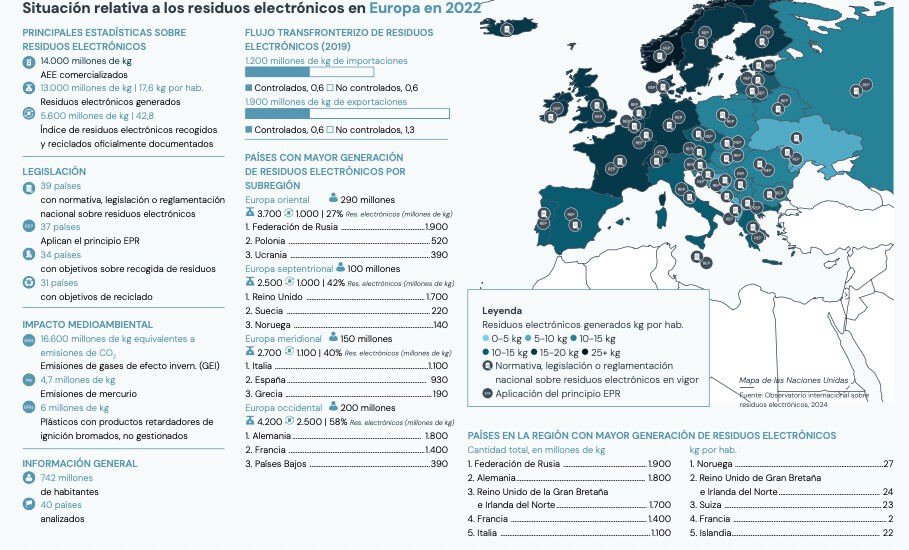
The European Union loses an estimated €16 billion annually in valuable materials discarded as e-waste. This pilot plant aims to change that by demonstrating a viable method to extract these metals cleanly and efficiently.
How the Submerged Lance Furnace Works
The pilot plant uses a submerged lance furnace that operates at over 1,200°C to melt electronic waste. This technology allows for the recovery of metals from complex waste streams that are difficult to process with conventional methods. The first experimental pour produced copper, gold, silver, and platinum, proving the concept works.
Unlike traditional recycling methods that often focus on bulk metals like steel and aluminum, this furnace is designed to handle the intricate mix of materials found in electronics. The high-temperature process separates metals from plastics and other components, enabling efficient recovery.
Key Advantages of the Technology
- Recovers critical metals like copper, gold, silver, and platinum from e-waste.
- Operates at high temperatures (over 1,200°C) to melt and separate materials.
- Provides a clean and efficient process, reducing environmental impact.
- Offers a potential solution to Europe's critical raw materials dependency.
- Demonstrates a scalable model for urban mining.
The Scale of Spain's E-Waste Challenge
Spain's e-waste generation is substantial: nearly 930,000 tons per year. However, only a fraction is properly collected and recycled. The UN's E-waste Monitor 2024 highlights that less than half of Spain's e-waste is documented and recycled, meaning a significant portion is either improperly disposed of or lost in landfills.
This pilot plant is a step toward improving those figures. By providing a domestic solution for recovering critical metals, Spain can reduce its reliance on imports and create a circular economy for electronics. The longer history behind the story is traced in Spain Opens Europe's First E-Waste Furnace to Recover Critical Metals.
| Metric | Value |
|---|---|
| Annual e-waste generation in Spain | ~930,000 tons |
| Spain's rank in Europe for e-waste generation | 6th |
| Percentage of e-waste documented and recycled | Less than 50% |
| Value of materials lost annually in Europe | €16 billion |
| Furnace operating temperature | Over 1,200°C |
What This Means for Europe's Critical Minerals Strategy
Europe is heavily dependent on imports for critical raw materials, many of which are essential for the green and digital transitions. The European Union has identified critical raw materials as a strategic priority, aiming to increase domestic extraction, processing, and recycling. This pilot plant aligns with those goals by demonstrating a technology that can recover metals from e-waste. The background to this story is set out in James Howells Gives Up on Recovering 8,000 Lost Bitcoin After 12 Years. A related thread runs through CSIC Job Bank: Requirements and How to Apply for Research Roles. Earlier coverage in China's Luxury Slump: How Top Brands Are Recovering shows how the argument developed.
The CSIC's CENIM is at the forefront of this effort. The successful first pour is a proof of concept that could lead to larger-scale facilities. If scaled up, this technology could help Europe reduce its reliance on foreign sources for metals like copper, gold, silver, and platinum. A closer look at the same subject appears in Reform UK's Summer Horribilis: Can the Party Recover. Anyone following the wider picture can start with How to Recover Deleted WhatsApp Messages on Android and iPhone. The same theme surfaces in Spain's Barbary Sheep: CSIC Study Questions Invasive Label, which takes a different angle.
Next Steps for the Pilot Plant
The plant will now undergo further testing to optimize the process and evaluate its economic viability. Researchers will focus on improving recovery rates, reducing energy consumption, and scaling the technology for industrial use. The ultimate goal is to develop a commercially viable process that can be replicated across Europe. Context on how this played out before sits in Spain Opens the Black Box of Workplace Algorithms. A companion piece, Energy Utilities: latest articles, approaches the same subject from another angle.
FAQ
What is a submerged lance furnace?
A submerged lance furnace is a type of metallurgical furnace that uses a lance submerged in the melt to inject fuel and air, generating high temperatures. It is used to melt and process various materials, including e-waste, to recover metals.
How much e-waste does Spain generate annually?
Spain generates nearly 930,000 tons of e-waste each year, according to the UN's E-waste Monitor 2024. This makes it the sixth-largest generator in Europe.
What metals can be recovered from e-waste?
E-waste contains valuable metals such as copper, gold, silver, and platinum, as well as critical raw materials like rare earths. The pilot plant has successfully recovered copper, gold, silver, and platinum.
Why is this pilot plant important for Europe?
It demonstrates a domestic solution for recovering critical metals from e-waste, reducing Europe's reliance on imports and supporting the EU's critical raw materials strategy. It also offers an environmentally friendly way to manage e-waste.
Browse the Shop
 Acacia frida deluxe solid wood bed frame |
Bedroom bench |
Bed chest drawers |
Lingerie dresser |
Frame base |
Mirror with jewelry storage |
30 Bathroom Vanity |
Memory foam queen mattress |
Mattresses for back pain |
Nightstand set of 2 |
Grand Goldman Shop |
Civil Lawyer
Deutschland Trikot WM 2026







