

On 15 October, Tesla staged a Roadster reveal at SpaceX's Texas facilities that ended with a car suspended more than 60 metres in the air, flipped over and brought back down on compressed-air thrusters, then launched over five other cars and a truck. The same day, Porsche announced its Mission S with a press release on its communications portal. Two ways of presenting a future project, and two radically different ones. The comparison explains why Tesla chose spectacle, and why the Roadster itself was almost beside the point.
A press release versus a flying car
The Spanish rap group Violadores del Verso once put it that it does not matter what you live through, or what reality is, so long as you control how you tell it. That line goes a long way to explaining why Tesla, a company that sold the Cybertruck as the definitive pickup and then missed its own price and range promises, and that has stopped building the Model S and Model X to free up capacity for the Optimus humanoid robot, devoted a full evening to a marketing exercise for a car that does not yet exist in production form. What happened in Texas was less a vehicle unveiling than a live demonstration of what the brand wants to be seen as capable of.
Find Original, High-end Home Decor that spark conversation at Grand Goldman Shop.

How has Tesla sold millions of cars without buying television spots, billboards or specialist-magazine advertising? With events like this one. The company worked out long ago that it did not need the traditional channels of exposure if the product was disruptive enough. Every new car gets a livestream. Risks get taken. Some days it works, as with the Roadster acrobatics. Some days it does not, as with the shattered Cybertruck window. Either way, Tesla can generate demonstrations loud enough to land in general-interest outlets without paying them. By the following morning, Spanish radio was discussing the car's pirouettes. Very few companies can turn a technology announcement into an event in its own right. The iPhone is the only phone that gets talked about in generalist media every time it launches, and in Spain only Sony and Nintendo carry that weight in consoles. Nobody in the car industry has it.
What we actually learned about the car
Almost the only thing missing from Texas was a conventional car presentation. Launches usually follow a defined sequence: one or two early announcements with interior and exterior images to build interest, a media call to show the full car with its specifications and an estimated price, then a final announcement confirming price and equipment. Yesterday skipped most of that. All we know for certain is that reserving the two-seat electric convertible requires $50,000 up front, and that the technical figures are worse than those announced almost a decade ago, when the car was pitched as a 2+2 with quicker acceleration and more range. A version with fans underneath to generate ground effect and hold the car upside down demands a $250,000 reservation. No final price has been given. Production is targeted for 2028, against an original promise of 2020.
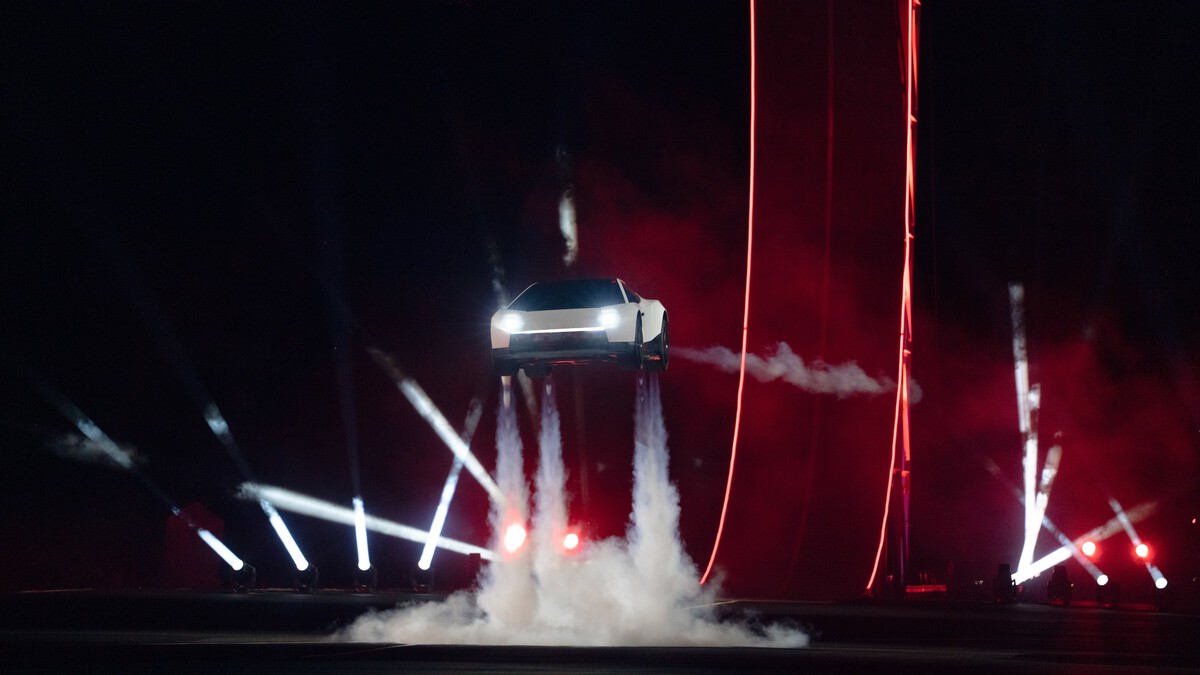
The Roadster's Texas appearance was a stage trick: no doors opened, no journalist sat inside, no specification sheet was handed out.
That the reveal took place at SpaceX's Texas site is no coincidence, nor is the fact that the flying version cannot be reserved at all: it requires an invitation from Tesla. No price has been mentioned, but the company has confirmed the car would not be road-registrable and therefore not legal for street use. The event was, in effect, a live demonstration of how Tesla can miniaturise compressed-air thrusters to turn the car into a kind of cabin that holds itself aloft by expelling gas in a controlled way. It lands in the middle of persistent speculation about a Tesla-SpaceX merger. Barclays treats it as a done deal for December, and JP Morgan has called it a logical step, arguing that AI research can benefit both companies and that vertical integration between them is the key advantage.
The commercial case doesn't close
A rocket-equipped Roadster makes no commercial sense. Homologating one would mean entering uncharted territory, trying to reconcile a product with both road-vehicle and aircraft regulations, which in the United States sit with different agencies. Flying the car on public roads would require a special permit on top of that. These are barriers that make mass production harder, not easier, and they sit awkwardly beside the regulatory questions raised by Tesla's flying-car reveal in Texas, which pushed the same spectacle into the mainstream conversation.
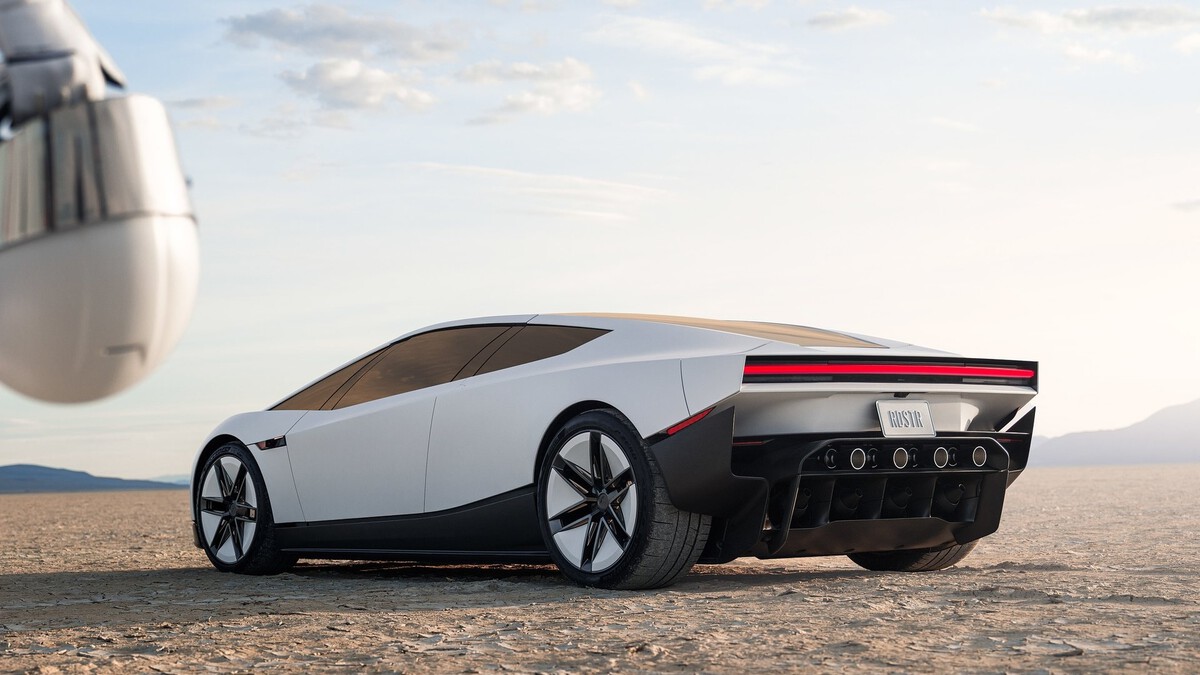
The 2026 concept keeps the 2+2 shape and the removable glass roof, but nothing about it is homologated for the road.
Musk said he did not want a human driver because he could not be sure how the experiment would turn out. In truth, nothing about the display was a coin toss. Every element was calculated to be as spectacular as it was achievable, and the success rate would probably have been lower with a person at the controls. That also lets Tesla project confidence in its computational and AI systems, a message that resonates as autonomous driving spreads. The same week, London's robotaxi rollout debate showed how contested that ground has become, while Uber's robotaxi trial in Manchester demonstrated how quickly the technology is moving into ordinary streets.
Selling the brand, not the car
The subtext is that Tesla spent the evening selling Tesla. It presented itself as a company able to build rockets at scale, to put fans under a car whose homologation remains an open question, and to make that car pirouette in mid-air. The vehicle is the vehicle for the message. That matters commercially, because brand heat feeds residual values, and EV resale values holding up better than expected have shown that perception can outlast product cycles. It matters politically too, as trade rules reshape where cars can be sold: Britain's lockout from the Made in Europe law and China curbing hybrid exports to the EU are redrawing the map for everyone, Tesla included.
There is a domestic regulatory backdrop as well. The US transport secretary's war on 'woke' has injected politics into safety rulemaking, and a car that flies over other vehicles sits squarely in that contested space. None of this appeared on stage in Texas, but all of it shapes whether a Roadster with thrusters could ever be more than a demonstration.
So a new Tesla Roadster was presented yesterday, and the Roadster was the least important thing about it. The reservation book is open at $50,000, the thruster version at $250,000, production is pencilled in for 2028, and the flying variant remains invitation-only and street-illegal by design. The real product on show was the brand's ability to command attention without buying it. Whether that translates into deliveries, homologation and a car people can actually drive is the question Tesla has left for another day, and for the reservations that have already been waiting almost eight years.
For the latest development on this topic, see Prime Video's Your Love Life Tackles COVID Pandemic in Romance.
Browse the Shop
 Acacia frida deluxe solid wood bed frame |
Bedroom bench |
Bed chest drawers |
Lingerie dresser |
Frame base |
Mirror with jewelry storage |
30 Bathroom Vanity |
Memory foam queen mattress |
Mattresses for back pain |
Nightstand set of 2 |
Grand Goldman Shop |
Civil Lawyer
Deutschland Trikot WM 2026
Acacia frida deluxe solid wood bed frame |
Bedroom bench |
Bed chest drawers |
Lingerie dresser |
Frame base |
Mirror with jewelry storage |
30 Bathroom Vanity |
Memory foam queen mattress |
Mattresses for back pain |
Nightstand set of 2 |
Grand Goldman Shop |
Civil Lawyer
Deutschland Trikot WM 2026










